
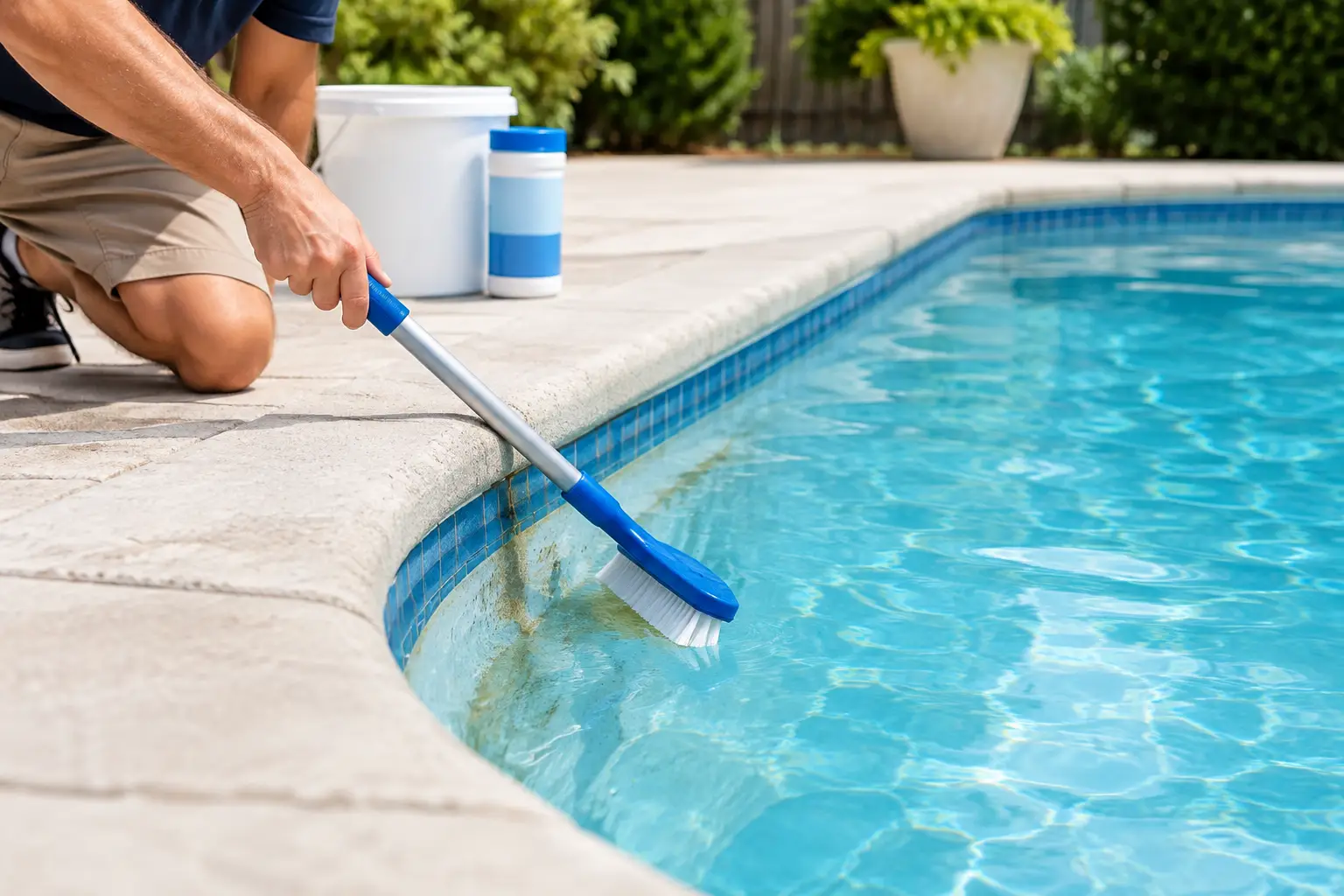
How to Remove Pool Stains Safely in Northern Virginia
By Jason DeBosky | The Pool Sharks
A pool stain can take attention away from an otherwise beautiful backyard. Whether it is a brown mark beneath fallen leaves, rusty discoloration near a fitting, or a rough deposit along the waterline, the right treatment starts with understanding the cause.
Knowing how to remove pool stains safely means matching the treatment to both the stain and the pool finish. The strongest chemical or most aggressive brush can create damage that is harder to correct than the original discoloration.
For Northern Virginia homeowners, seasonal debris, changing water conditions, and equipment wear all deserve consideration. A careful assessment helps restore the pool’s appearance while protecting its finish.
Identify the Stain Before Choosing a Treatment
Organic staining, metal staining, and calcium deposits require different approaches. Color and location provide clues, but appearance alone does not confirm the cause.
Organic Stains
Leaves, acorns, berries, algae, and other organic material can leave marks when they remain against the pool surface.
These stains may appear brown, green, tan, or dark gray. They often develop where debris collects, including steps, corners, and areas with limited circulation.
Northern Virginia’s autumn leaf drop makes prompt debris removal especially useful. Material left beneath a winter cover can remain in contact with the finish for extended periods.
Metal Stains
Iron, copper, manganese, and other metals can discolor pool surfaces under certain water conditions.
Possible sources include fill water, some pool products, corroding equipment, and metal fixtures. Staining may appear after a refill or a change in water chemistry.
Rust-colored marks near a fitting can also indicate a localized corrosion issue. Removing the visible mark will not resolve an underlying source of rust.
Calcium Deposits and Finish Changes
White or gray deposits with a rough texture may be calcium scale.
Other discoloration may come from etching, mottling, worn plaster, or an issue within the finish. These conditions can resemble stains but may not respond to stain-removal products.
A professional inspection helps distinguish a removable deposit from a change in the surface itself.
Test the Water and Inspect the Finish
Before treatment, review the pool’s water chemistry and recent maintenance history.
Relevant checks include:
- pH and total alkalinity.
- Sanitizer level.
- Calcium hardness.
- Stabilizer level, where applicable.
- Metals testing when the symptoms suggest it.
For plaster pools, a professional may also evaluate the water’s saturation balance to assess its tendency to form scale or become aggressive toward the finish.
Recent changes offer useful clues. Did the stain appear after topping off the pool, adding a product, opening for the season, or experiencing a heater problem?
The surface matters just as much. Standard plaster, quartz, pebble, tile, fiberglass, and vinyl require different cleaning methods. Follow the finish manufacturer’s guidance before using any brush or treatment.
How to Remove Organic Pool Stains
For a fresh organic mark, begin with debris removal and gentle brushing using a surface-approved brush.
Restore appropriate circulation and maintain the sanitizer level recommended for your pool’s water conditions. Some fresh stains improve with consistent care once the material causing them is removed.
Avoid scattering chlorine granules onto the pool floor or placing tablets directly against a stain. Concentrated chemical contact can bleach, discolor, or damage a finish.
If the mark persists, a technician can evaluate a controlled treatment appropriate for the surface.
When staining is widespread or accompanied by algae, the whole pool needs attention. Brushing one spot will not correct an ongoing problem with sanitation, filtration, or circulation.
Treat Metal Stains Without Making Them Worse
Metal staining requires a different approach from organic staining.
A heavy chlorine treatment can make some metal stains more visible. Before adding products, identify the likely metal source and confirm that the proposed treatment is suitable for the finish.
Professional stain testing may help determine which treatment is likely to work. A response to a particular test provides a clue, but it should be considered alongside water analysis and equipment condition.
Manage the Metals After Treatment
Lifting a stain does not necessarily remove the metal from the pool water.
A suitable sequestrant can help keep metals dissolved and reduce the likelihood of redeposition. These products require ongoing management and do not, by themselves, remove metals from the pool.
Depending on the findings, a technician may recommend a compatible metal-removal process or carefully planned water replacement.
The source also needs attention. Fill water, copper-containing products, corroding fixtures, or a damaged heater heat exchanger can contribute to recurring stains.
Treating the surface while leaving the source unresolved often leads to another round of discoloration.
Remove Calcium Scale With Surface-Specific Care
Calcium scale can collect on waterline tile, spillways, and other surfaces. Treatment depends on the deposit and the material beneath it.
Tile, grout, natural stone, and pool finishes do not tolerate the same methods. Aggressive scraping, abrasive tools, or unsuitable acids can scratch surfaces, damage grout, or etch stone.
A professional assessment should address both the buildup and the water conditions encouraging it. Cleaning the deposit without correcting the chemistry can allow it to return.
Is Acid Washing the Right Answer?
Acid washing may be appropriate for some plaster pools with stubborn staining or deposits, but it should follow an evaluation of the finish.
The process removes some surface material. Repeated or overly aggressive treatment can contribute to roughness, uneven appearance, and premature finish wear.
Suitability depends on the finish type, age, condition, and manufacturer’s instructions. Specialty finishes may require a specific process or a different treatment entirely.
Draining also requires careful planning. Groundwater conditions can create a risk of structural damage to an empty pool, even when the weather appears dry.
Do not drain a pool solely to investigate or treat a stain without professional guidance.
When to Call The Pool Sharks
A small, fresh leaf stain may improve with routine care. Persistent, widespread, or unexplained discoloration deserves a closer look.
Schedule an assessment if:
- Stains return after treatment.
- Discoloration appears after a refill or chemical adjustment.
- Marks develop around lights, drains, fittings, or returns.
- The surface feels rough or looks damaged.
- Staining occurs alongside leaks or equipment problems.
- You are considering acid washing or draining.
The Pool Sharks evaluates the stain, water conditions, finish, and relevant equipment before recommending treatment.
Our goal is to select an appropriate method, explain what improvement is realistic, and address conditions that could cause the problem to return.
Prevent Pool Stains Through Consistent Care
Routine maintenance helps keep debris and water conditions from becoming finish problems.
Skim, brush, and vacuum consistently. Remove leaves and other material promptly after storms and during heavy seasonal debris.
Check water chemistry on a reliable schedule and maintain it according to the pool finish and equipment requirements. Clear water alone does not confirm that the chemistry is balanced.
If fill water contains metals, establish a management plan before significant top-offs or refilling. Avoid adding metal-containing products without understanding their effect on your pool.
Keep filters maintained, investigate leaks, and address corrosion early. For covered pools, appropriate winter monitoring helps identify debris buildup and changing conditions before spring opening.
Protect Your Pool’s Finish With The Pool Sharks
A polished pool starts with attentive care of the water, surface, and equipment.
The Pool Sharks provides stain assessments, pool maintenance, equipment service, and finish evaluations for homeowners throughout Loudoun, Fairfax, Fauquier, and Prince William counties.
Whether your pool has a fresh leaf stain or recurring discoloration, we can help identify the cause and recommend the next step.
Call The Pool Sharks at (703) 452-2788 to schedule a pool stain assessment.
The Pool Sharks — Where Luxury Meets Peace of Mind.