
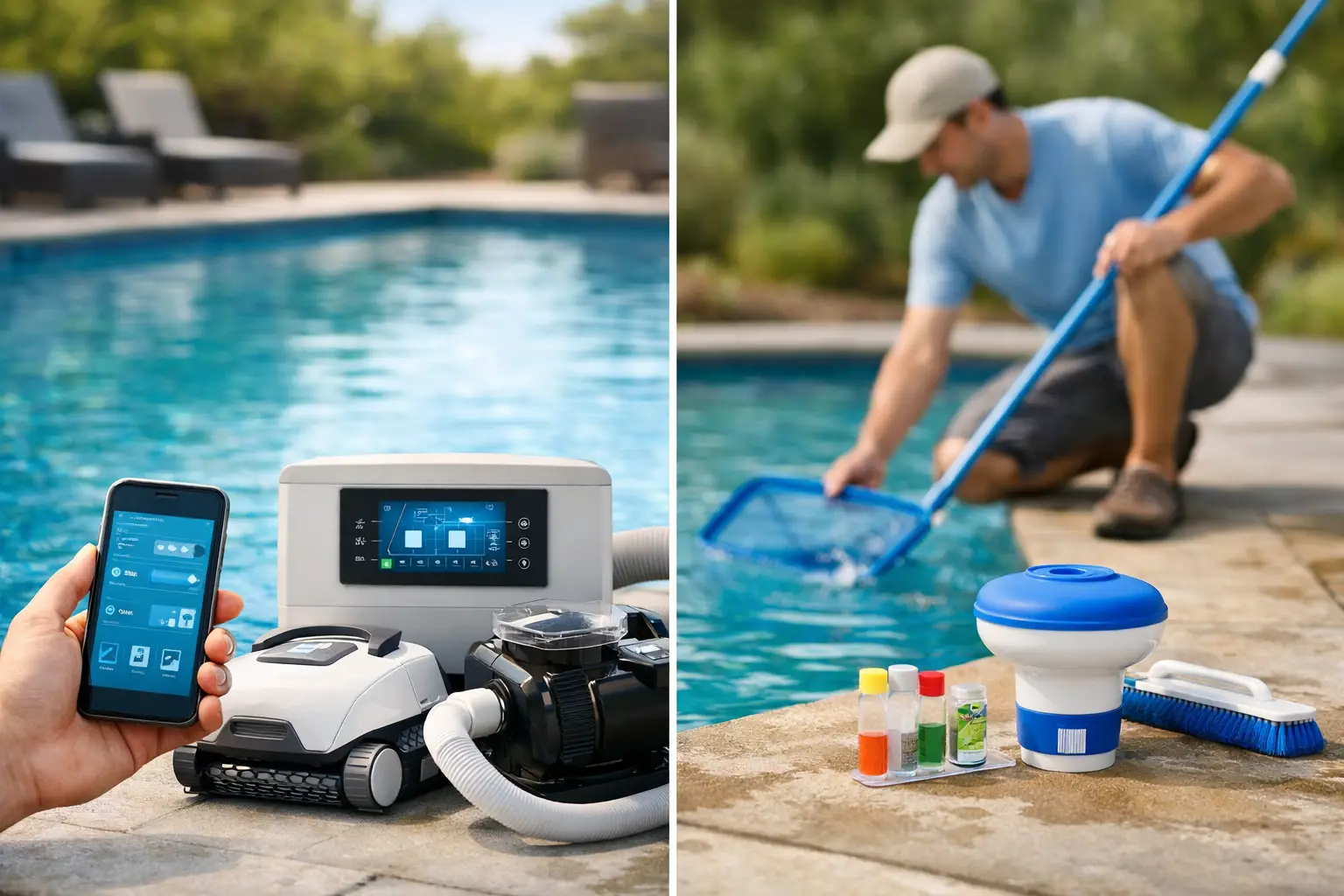
Pool Automation Versus Manual Care in Northern Virginia
By Jason DeBosky | 30-Year Pool Industry Veteran Published by The Pool Sharks
Pool automation versus manual care is not simply a choice between using technology and performing tasks by hand. It determines how consistently your pool water, equipment, and surfaces are monitored and protected throughout the year.
A pool may look clear on Saturday afternoon while a circulation problem, chemical imbalance, or equipment failure develops beneath the surface. Automation can improve convenience, scheduling, and energy efficiency. However, professional manual care provides observation, judgment, cleaning, and preventive attention that technology cannot fully replace.
For most luxury pools in Northern Virginia, the strongest solution combines modern automation with attentive professional service. This approach gives homeowners convenient control while protecting the pool through changing weather, heavy use, seasonal debris, and equipment wear.
What Is Pool Automation?
Pool automation connects compatible pool equipment to a central control system. Depending on the equipment and controller, homeowners may operate the system from a wall panel, handheld remote, or smartphone application.
A modern automation system may control:
- Variable-speed pool pumps
- Pool and spa temperatures
- Heaters and heat pumps
- Pool and landscape lighting
- Waterfalls and fountains
- Spa jets and blowers
- Saltwater chlorine generators
- Automatic valves
- Filtration schedules
- Freeze-protection settings
Instead of walking to the equipment pad, a homeowner can adjust many features from inside the house or while away from the property.
For example, the pool can begin circulating before a morning swim. The spa can start heating before guests arrive. Lighting and water features can activate together for an evening gathering. A variable-speed pump can also run at lower speeds for longer periods, improving circulation while reducing unnecessary energy consumption.
These features make pool ownership easier. However, automation only performs the commands it has been programmed to perform. It does not provide complete pool care.
What Does Manual Pool Care Include?
Manual pool care involves physically inspecting, testing, cleaning, and adjusting the pool and its equipment. Professional manual care goes well beyond skimming leaves from the surface.
A qualified pool technician may:
- Test and adjust water chemistry
- Brush pool walls, steps, and benches
- Remove surface and floor debris
- Empty skimmer and pump baskets
- Inspect water clarity and circulation
- Examine pumps, filters, heaters, and valves
- Identify leaks or unusual equipment sounds
- Monitor filter pressure
- Inspect tile, coping, plaster, and other surfaces
- Recognize early algae growth or staining
- Adjust equipment schedules as conditions change
This hands-on inspection is important because every pool responds differently to its environment.
Rain, pollen, extreme heat, landscaping debris, nearby construction, and heavy swimmer use can quickly affect the water. Northern Virginia pools may also experience rapid temperature changes and intense seasonal debris.
Professional pool chemical balancing considers those conditions instead of responding to a single test result.
Pool Automation Versus Manual Care: Key Differences
The main differences between pool automation and manual care involve consistency, observation, responsiveness, and responsibility.
Automation Provides Consistent Scheduling
Automation performs predictable tasks at programmed times. It does not forget to start the pump or activate a scheduled filtration cycle.
This consistency is valuable for homeowners with demanding schedules, multiple residences, or complex pool systems.
Manual Care Provides Human Judgment
An experienced technician can recognize conditions that a controller may overlook.
For example, the technician may notice:
- Weak water flow from a return
- Air entering the circulation system
- Early algae growth on a shaded step
- A faint plumbing leak
- Unusual pump or heater sounds
- Surface staining after a storm
- A clogged basket restricting circulation
- Water that looks or feels different despite acceptable test results
Automation responds to settings and sensor readings. A trained professional evaluates the entire pool.
Automation Improves Convenience
A homeowner can prepare the spa, change the lighting, operate a water feature, or adjust the temperature without visiting the equipment pad.
That convenience can dramatically improve the ownership experience, especially when the pool includes multiple features.
Manual Care Performs Physical Work
Automation cannot brush the walls, clean the tile line, empty baskets, remove debris, inspect the plaster, or physically examine equipment.
Robotic cleaners can reduce some labor. However, they do not replace complete weekly pool maintenance.
How Pool Automation Affects Water Quality
Automation can support better water quality by maintaining reliable circulation and filtration schedules. Some advanced systems also work with chemical feeders or monitoring equipment.
However, automated readings are not infallible.
Sensors can become dirty, lose calibration, or provide inaccurate results. Chemical containers can run empty. Salt cells can develop scale. Feeders may clog. Water conditions can also change faster than an automated system can accurately interpret them.
Common causes of sudden water changes include:
- Heavy rainfall
- High temperatures
- Large pool parties
- Pollen and organic debris
- Fertilizer entering the pool
- Increased sunscreen and body oils
- Reduced circulation
- Filter problems
- Low sanitizer output
Therefore, automated chemistry equipment should support regular professional testing rather than replace it.
The Pool Sharks evaluate the water, circulation, equipment, and recent conditions together. This complete approach helps protect water clarity, swimmer comfort, and pool surfaces.
Pool Automation Costs Versus Manual Care Costs
Pool automation generally requires a larger upfront investment. The final cost depends on the controller, electrical requirements, equipment compatibility, number of features, and condition of the existing equipment pad.
An automation project may require:
- A central control panel
- Electrical installation
- Valve actuators
- Temperature or flow sensors
- Equipment communication upgrades
- New relays or circuit protection
- Compatible pumps, heaters, or salt systems
- Professional programming and commissioning
Older pool systems may need additional upgrades before full automation is practical.
Manual pool care creates an ongoing service expense. However, professional care can help prevent costly problems caused by neglected chemistry, restricted circulation, scale, algae, staining, leaks, and equipment failure.
The least expensive option is not always the option with the lowest immediate price. The better question is which approach provides dependable protection for the complete pool investment.
When Pool Automation Delivers the Most Value
Pool automation is especially valuable when a property has a complex pool and outdoor-living environment.
It may be a strong investment for pools with:
- An attached spa
- Variable-speed pumps
- Multiple lighting zones
- Waterfalls or deck jets
- Fire and water features
- Automated valves
- Saltwater equipment
- Multiple bodies of water
- Frequent entertaining
- Seasonal or part-time occupancy
Automation can coordinate these features and make the pool easier to enjoy.
A homeowner can return from dinner to a heated spa, illuminated pool, and active water features. A seasonal resident can check selected system settings remotely. A family can maintain consistent operating schedules without making daily trips to the equipment pad.
Nevertheless, the system must be programmed correctly. Poor schedules, incorrect valve positions, incompatible equipment, or overlooked alerts can reduce performance and create frustration.
Professional setup and periodic review remain essential.
When Manual Pool Care Is Essential
Manual care is essential whenever the pool needs observation, cleaning, testing, or troubleshooting.
Water Chemistry
Automated systems may assist with chemical delivery, but water still requires regular professional testing. This is particularly important after storms, extreme heat, large gatherings, or unusual water conditions.
Physical Cleaning
Leaves, pollen, oils, fine debris, and early staining require physical attention. Tile lines, steps, benches, skimmers, filters, and drains must also be inspected.
Equipment Inspection
Pool equipment often provides warning signs before it fails completely.
A small leak, changing filter pressure, unusual vibration, air bubbles, reduced flow, or new sound may indicate a developing problem. Early detection can prevent interrupted pool use and more expensive damage.
Homeowners can learn more in The Pool Sharks’ pool equipment maintenance guide.
Seasonal Pool Protection
Northern Virginia pools experience freezing temperatures, heavy pollen, summer storms, and falling leaves. Each season places different demands on the water and equipment.
Professional pool openings and pool closings help prepare the plumbing, equipment, water, and surfaces for the conditions ahead.
A properly fitted pool safety cover also provides important seasonal protection.
Can Automation Replace Weekly Pool Service?
No. Pool automation can reduce repetitive work, but it cannot replace comprehensive weekly pool service.
Automation can run equipment and coordinate selected functions. It cannot physically inspect the pool, recognize every developing problem, or perform the cleaning required to keep a luxury pool presentation-ready.
Professional weekly pool maintenance may include water testing, chemical adjustment, cleaning, equipment observation, and preventive recommendations.
This combination creates a more dependable system:
- Automation handles scheduled commands.
- Professional service evaluates actual conditions.
- The homeowner receives convenient control.
- The pool receives consistent protection.
For many Northern Virginia homeowners, that balance offers the best combination of comfort, reliability, and peace of mind.
Pool Automation for Saltwater Pools
Saltwater pools can also benefit from automation. A compatible system may coordinate pump operation, saltwater chlorine production, heating, and other equipment.
However, a saltwater pool still requires routine care.
Salt cells can accumulate scale and lose efficiency. Salt levels can change through dilution, splash-out, backwashing, or water replacement. The pool’s pH may also rise over time.
In addition, a saltwater system still produces chlorine. It does not eliminate the need for water testing, surface care, filtration, or equipment inspections.
The Pool Sharks provide professional saltwater pool system service for Northern Virginia homeowners who want convenient operation without sacrificing proper oversight.
Choosing the Right System for Your Home
Every pool and property is different. Before investing in automation, consider the pool’s complexity, equipment condition, household schedule, and desired level of involvement.
Ask the following questions:
- Does the pool include a spa, heater, lighting zones, or water features?
- Is the current equipment compatible with modern automation?
- Do you travel frequently or divide time between residences?
- Is the pool used regularly for entertaining?
- Would remote access meaningfully improve convenience?
- Who will monitor alerts and equipment performance?
- Who will test the water and physically inspect the pool?
- How much daily responsibility do you want to retain?
A simple pool may only need reliable pump scheduling and professional weekly care. A more complex luxury property may benefit from a comprehensive control system supported by concierge-level service.
The right system should simplify pool ownership rather than turn the homeowner into a full-time equipment manager.
The Best Approach: Automation With Professional Care
For most high-value pools, the best answer to pool automation versus manual care is a thoughtful combination of both.
Automation provides convenient control, dependable scheduling, and coordinated equipment operation. Professional care provides cleaning, water analysis, preventive inspection, and informed decision-making.
Together, they help:
- Maintain clearer and more comfortable water
- Improve equipment operation
- Identify small problems earlier
- Reduce unnecessary energy use
- Protect pool finishes and components
- Keep the property ready for family and guests
- Make year-round ownership more manageable
Technology should support the pool-care plan. It should never create a false sense that the pool no longer requires professional attention.
Protect Your Northern Virginia Pool Year-Round
A luxury pool is more than a seasonal amenity. It is an extension of the home, an entertainment space, and a significant property investment.
The Pool Sharks help Northern Virginia homeowners combine dependable technology with attentive professional care. Our services are designed to protect the water, equipment, surfaces, and complete ownership experience.
Whether you need automation guidance, weekly maintenance, chemical balancing, equipment service, or year-round concierge support, we can evaluate the pool and recommend the right level of care.
Explore our year-round pool concierge service or contact The Pool Sharks to discuss your pool.
The Pool Sharks — Where Luxury Meets Peace of Mind.
Frequently Asked Questions About Pool Automation Versus Manual Care
Is pool automation worth the investment?
Pool automation can be worthwhile for homeowners with spas, heaters, variable-speed pumps, lighting, water features, or frequent entertaining. Its greatest benefits are convenience, scheduling, and coordinated equipment operation.
Does pool automation maintain water chemistry automatically?
Some systems can monitor or adjust selected chemistry values. However, sensors require maintenance and calibration, and professional water testing remains necessary.
Can pool automation reduce energy costs?
Automation may reduce unnecessary energy use by coordinating pump speeds, filtration schedules, and heating. Actual savings depend on the equipment, programming, pool design, and usage.
Does an automated pool still need weekly service?
Yes. Automation cannot brush surfaces, remove debris, clean baskets, inspect equipment, or apply professional judgment to changing water conditions.
Can older pool equipment be automated?
Some older equipment can be integrated with modern controls. Other systems may require new relays, actuators, electrical improvements, or compatible replacement equipment.
Is automation useful for a second home?
Yes. Remote access can be valuable for seasonal or secondary residences. However, remote monitoring should still be supported by dependable local pool service.
What is the best choice for a luxury pool?
The strongest approach is usually automation combined with professional weekly or concierge-level care. This provides convenient control while maintaining hands-on protection.