
By Ashton DeBosky | The Pool Sharks of Northern Virginia
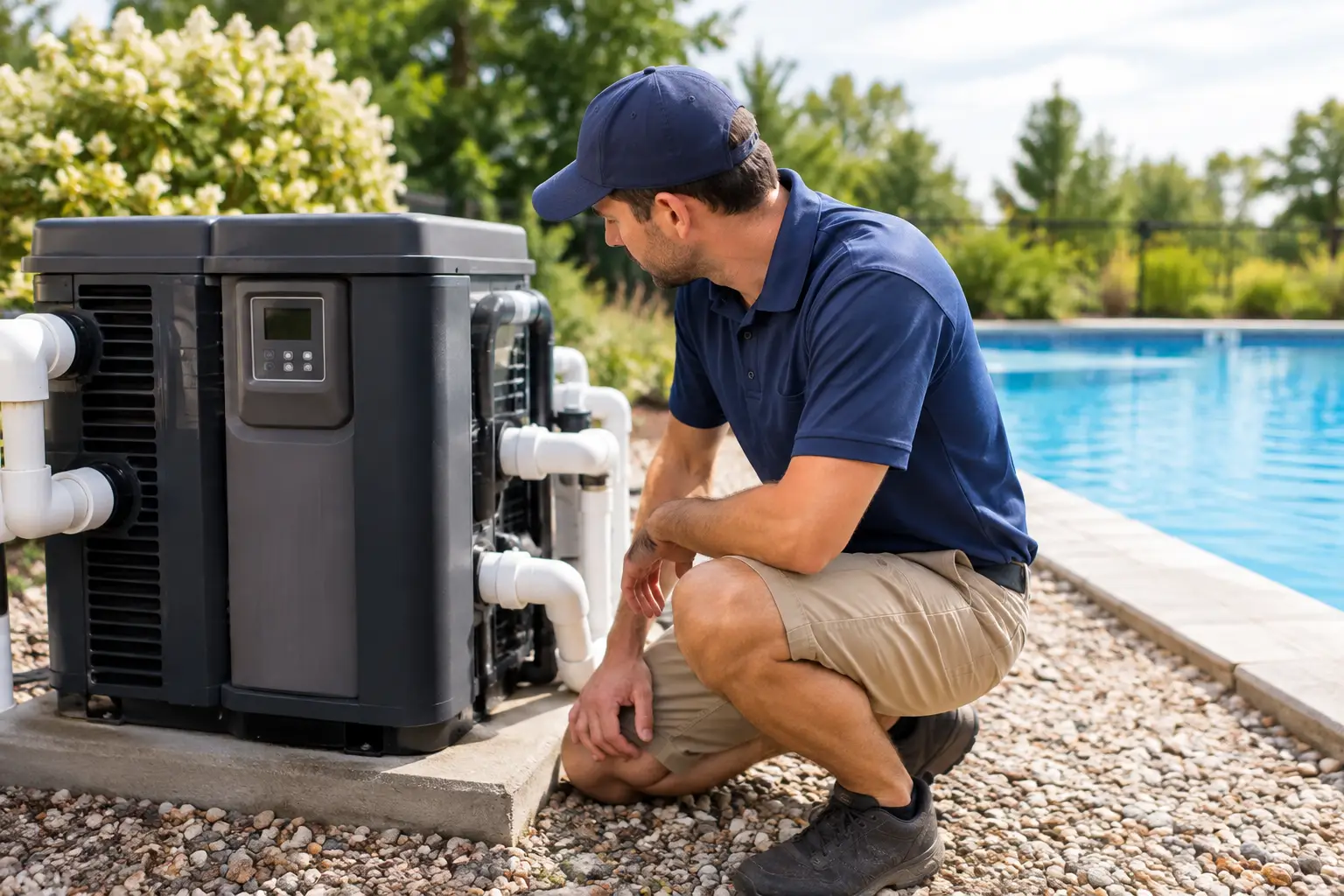
Pool heater replacement should begin with a clear assessment of the equipment and the way you use your pool. In Northern Virginia, the right decision balances spring and fall conditions, desired water temperature, utility costs and how quickly you want the pool or spa to warm.
The Pool Sharks of Northern Virginia helps homeowners evaluate heating concerns in the context of the entire pool system. From Leesburg and Ashburn to McLean, Great Falls and Vienna, a well-planned project starts with understanding the problem before selecting new equipment.
Signs That Deserve Professional Attention
A heater that repeatedly stops, displays recurring fault codes, leaks or no longer reaches the expected temperature needs assessment. Unusual noises, visible corrosion or soot around a gas heater also warrant attention. Repeated resets can hide a developing problem rather than resolve it.
These symptoms do not all mean replacement is necessary. Restricted water flow, operating settings, controls or a serviceable component can affect performance. Record the model and displayed error code if you can do so safely, and arrange professional pool heater service.
If you smell gas, move away from the area, avoid flames and electrical switches, and contact the gas supplier or emergency services from a safe location. Do not attempt to relight or dismantle the heater.
Compare Repair and Replacement on Condition
Age provides context, but there is no universal replacement birthday for a pool heater. Useful service life depends on equipment design, installation, water chemistry, maintenance and operating conditions.
A targeted repair may make sense when the rest of the equipment is sound and parts are available. Replacement deserves consideration when significant deterioration, repeated failures or a major repair makes continued investment difficult to justify.
Ask for an explanation of the diagnosis, repair scope, parts availability and replacement options. Compare complete installed costs rather than the price of a component against the price of a boxed heater. Any warranty should be reviewed for the specific model and installation.
Review the System Before Choosing a Heater
A replacement should work with the pool, not simply occupy the old heater's space. The assessment should consider circulation, filtration, plumbing, controls, installation clearances and the applicable electrical or fuel supply.
Poor water balance or inadequate flow can affect a new heater as well as an old one. Addressing those conditions is part of planning a sensible project. Describe recent water problems, leaks, equipment changes and service history so the installer can investigate relevant factors.
For a pool with an attached spa, explain how you use each body of water. Heating a spa quickly and maintaining a pool temperature through the season are different priorities.
Gas Heater or Heat Pump?
A gas heater produces heat through combustion and is often considered when responsive heating is important. An electric heat pump transfers heat from the surrounding air into the water. Its performance depends on operating conditions and the selected model.
Pentair's pool heater overview explains the basic distinction: heat pumps generally heat more gradually than gas heaters. For a Northern Virginia property, compare expected performance during the weather in which you actually intend to swim.
Neither technology is automatically the best choice for every homeowner. Fuel and electricity rates, usage patterns, installation requirements and desired temperature all influence the decision. Avoid a proposal that promises a fixed savings percentage without explaining its assumptions.
Size for Your Pool and Expectations
A larger number on the equipment label does not by itself establish a better match. Pool dimensions, surface area, wind exposure, desired temperature rise, cover use and attached features can influence selection.
Tell the provider whether you swim most days, heat only for weekends or want to extend use into cooler months. A system selected to maintain a moderate temperature may feel different from one chosen for occasional rapid heating.
Ask what performance is realistic under the conditions discussed. Model-specific specifications and a site assessment should guide the recommendation rather than a generic rule based only on pool gallons.
Understand the Complete Installation Scope
A clear proposal should identify the selected heater, removal of old equipment, required plumbing or connection work, startup checks and any separately priced items. Ask who coordinates applicable permits and qualified trades when gas or electrical work is involved.
Installation should follow manufacturer requirements and applicable local rules. Landscaping or screening must not obstruct required airflow, ventilation, access or service clearances. A neat equipment pad is valuable, but concealment cannot take priority over safe operation.
Confirm compatibility with existing automation and how the pool and spa will be controlled after installation. The homeowner should receive useful operating guidance and documentation for the equipment actually installed.
Protect Performance After Installation
Consistent water care, appropriate circulation and filter maintenance support heater operation. Follow the model's maintenance instructions and arrange professional service when needed.
A suitable pool cover can reduce heat loss when used correctly, but cover selection also involves fit, handling and safety considerations. Heating results still depend on weather and operating conditions.
Include heater observations in your weekly pool maintenance plan, and coordinate seasonal protection with pool closing service. Do not assume that a heater can protect a pool from freezing simply because it has a temperature control.
Frequently Asked Questions
Should a heater be replaced after one breakdown?
Not automatically. Diagnosis, overall condition, repair cost and parts availability should guide the decision.
Will a new heater lower my utility bills?
It may improve performance or efficiency, but actual cost depends on equipment, rates, weather, temperature settings and use. Request a comparison based on your property.
Can I replace it with the same size without an assessment?
The existing equipment may not reflect your current needs or installation conditions. Confirm sizing and compatibility before ordering.
Plan Pool Heater Replacement in Northern Virginia
The Pool Sharks serves homeowners across Loudoun, Fairfax, Fauquier and Prince William counties. Contact the team at (703) 452-2788 to discuss heating concerns, assessment and project availability.
Plan before the weekend or event when warm water matters most. A considered repair or replacement decision gives you a clearer understanding of the work, cost and expected performance.
The Pool Sharks of Northern Virginia — Where Luxury Meets Peace of Mind.