
By Ashton DeBosky | Owner, The Pool Sharks Published by The Pool Sharks
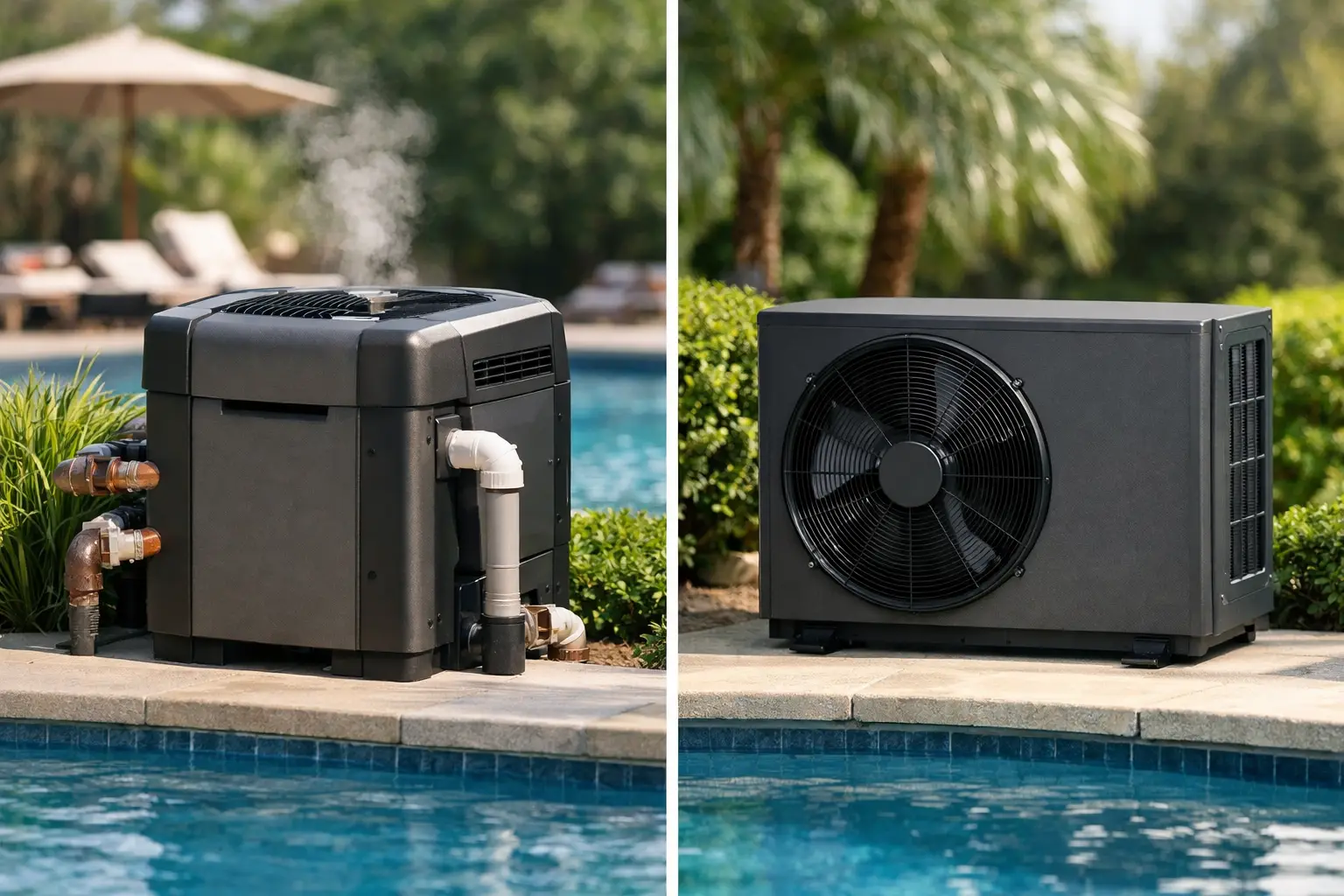
Pool Heater vs. Heat Pump: Which Premium Heating System Is Right for Your Northern Virginia Pool?
A custom swimming pool can look immaculate, yet if the water remains uncomfortably cool, it cannot deliver the backyard experience you envisioned. In Northern Virginia, where crisp spring mornings, humid summer afternoons, and unpredictable autumn cold snaps define the climate, choosing the right pool heating system is the single most important decision for extending your swimming season.
Whether your property is located in McLean, Great Falls, Vienna, Fairfax, Ashburn, Leesburg, Arlington, or Alexandria, the choice between a gas pool heater and an electric heat pump comes down to how you use your pool, how quickly you need the water heated, whether you have an attached spa, and your long-term energy efficiency goals.
Neither system is universally superior. The ideal choice depends on matching equipment specifications to your property's infrastructure and lifestyle.
---
Gas Pool Heater vs. Electric Heat Pump: The Core Differences
While both systems serve to warm your water, they operate on entirely different mechanical principles.
Gas Heater: [Natural Gas / Propane] ──(Combustion)──> Creates Instant Heat ──> Rapid Temp Rise Heat Pump: [Outdoor Air Heat] ──(Compressor)──> Transfers Ambient Heat ──> Steady Maintenance
Gas Pool Heaters
A gas pool heater burns either natural gas or liquid propane to generate instant thermal energy. As water circulates through the unit's combustion chamber and cupro-nickel or titanium heat exchanger, it absorbs direct heat and returns to the pool at a significantly elevated temperature.
- Heating Mechanism: Thermal combustion.
- Heating Speed: Rapid (1°F to 3°F temperature increase per hour on average).
- Climate Dependency: Independent of outdoor air temperature; operates efficiently even when ambient temperatures drop below 45°F.
Electric Pool Heat Pumps
An electric pool heat pump does not generate heat directly through combustion or resistance elements. Instead, it operates like a reverse air conditioner: an internal fan pulls ambient heat from the outdoor air over an evaporator coil, a compressor intensifies that heat, and a heat exchanger transfers the captured thermal energy into the circulating pool water.
- Heating Mechanism: Ambient thermal transfer.
- Heating Speed: Gradual (0.5°F to 1.5°F temperature increase per hour on average).
- Climate Dependency: Highly dependent on ambient air temperature; peak efficiency occurs when outside air is 50°F or warmer.
---
When a Gas Pool Heater Is the Ideal Fit for Northern Virginia
A gas pool heater is the performance choice for homeowners who require on-demand speed, total temperature control regardless of weather, and rapid heating for attached spas.
┌─────────────────────────────────────────────────────────────┐ │ BEST FIT FOR GAS HEATERS │ ├─────────────────────────────────────────────────────────────┤ │ • Attached hot tubs and spa combinations │ │ • Weekend-only and spontaneous entertaining │ │ • Shoulder-season swimming (April, May, October, November) │ │ • Homes with existing natural gas line connections │ └─────────────────────────────────────────────────────────────┘
Rapid Heat-Up on Demand
If you prefer not to keep your pool heated continuously throughout the week, a gas heater provides the power necessary to raise water temperature quickly. A properly sized gas unit can raise a 20,000-gallon pool from 70°F to 82°F in a matter of hours, allowing for spontaneous weekend entertaining across communities in Oakton, Clifton, and Reston.
Attached Spas and Hot Tubs
For properties featuring an integrated pool-and-spa combination, gas heat is nearly essential. Spas require heating to 100°F–104°F on short notice. A gas heater can elevate a 600-gallon spa from pool temperature to full therapy temperature in 15 to 30 minutes, whereas a heat pump may require an hour or more to accomplish the same rise.
Cold-Weather and Shoulder-Season Performance
Northern Virginia frequently experiences early-spring and late-fall temperatures that hover in the 40s and 50s. Gas heaters maintain complete heating capacity regardless of ambient air temperature, making them the most reliable choice for homeowners who open early in April and close late in November.
---
When an Electric Heat Pump Is the Smarter Investment
An electric heat pump is engineered for consistent, sustained water comfort and maximum energy efficiency over long stretches of the season.
┌─────────────────────────────────────────────────────────────┐ │ BEST FIT FOR HEAT PUMPS │ ├─────────────────────────────────────────────────────────────┤ │ • Daily lap swimmers and active families │ │ • Continuous temperature maintenance from May to September │ │ • Properties with solar panels or low electric rates │ │ • Properties without natural gas infrastructure │ └─────────────────────────────────────────────────────────────┘
Sustained Daily Swimming & Baseline Temperature
If your household uses the pool daily—such as for morning lap workouts, family recreation, or post-work relaxation—a heat pump is exceptionally cost-effective. Instead of firing up a high-BTU burner on demand, a heat pump runs quietly in the background alongside your variable-speed pump to hold your pool at an exact baseline temperature (e.g., 84°F) all summer.
Long-Term Operating Efficiency
Because heat pumps transfer existing heat rather than burning fuel, they achieve a Coefficient of Performance (COP) typically ranging from 5.0 to 6.5+. This means for every $1.00 of electricity consumed, the unit transfers $5.00 to $6.50 worth of heat into the water. For homeowners in Fairfax County and Loudoun County, this translates to substantial operating cost reductions over continuous multi-month use compared to propane or natural gas.
Climate Considerations in Northern Virginia
Heat pumps thrive during the core Mid-Atlantic swimming season (late May through September), when daytime ambient temperatures consistently exceed 65°F to 70°F. However, when ambient temperatures drop below 50°F during shoulder months, heat pump efficiency declines significantly.
---
Gas Pool Heater vs. Heat Pump: Side-by-Side Comparison
| Feature | Gas Pool Heater (Natural Gas / Propane) | Electric Pool Heat Pump | | :--- | :--- | :--- | | Heating Speed | Fast (1°F–3°F per hour) | Gradual (0.5°F–1.5°F per hour) | | Cool-Weather Output (<50°F) | 100% capacity in all weather | Reduced output; shuts down in near-freezing temps | | Operating Cost (Continuous) | Higher ongoing fuel consumption | 50%–75% lower monthly operating expense | | Operating Cost (Intermittent) | Lower overall cost for occasional use | Higher if constantly restarting from cold baseline | | Spa Suitability | Ideal (heats to 104°F in 15–30 min) | Limited (prolonged heating time) | | Utility Requirements | Dedicated gas supply line & meter | Dedicated 50–60 Amp 230V electrical breaker | | Average Lifespan | 6–10 years (dependent on water chemistry) | 10–15 years | | Best Ownership Fit | Flexible, weekend, or spa-focused use | Consistent, daily, season-long swimming |
---
The Hybrid Heating System: The Ultimate Setup for Northern Virginia Estates
For high-end residential properties in areas such as Great Falls, McLean, and Aldie, choosing between gas and electric does not have to be an either/or decision.
A Hybrid Heating Configuration integrates both systems on a unified equipment pad:
- The Heat Pump acts as the primary baseline heater, maintaining continuous, ultra-efficient water temperature throughout the week from late spring through early autumn.
- The Gas Heater functions as a booster, automatically engaging when rapid spa heating is requested or when unseasonable cold fronts drop ambient air temperatures below the heat pump's optimal operating threshold.
When paired with modern smart pool automation, the system switches between heat sources automatically based on utility rates, ambient temperatures, and target setpoints.
---
Critical Infrastructure, Sizing, and Pad Requirements
Installing high-efficiency pool heating equipment requires a thorough site assessment prior to delivery.
┌────────────────────────────────────────────────────────────────────────┐ │ PRE-INSTALLATION SITE CHECKLIST │ ├───────────────────────────────────┬────────────────────────────────────┤ │ Gas Heater Requirements │ Heat Pump Requirements │ ├───────────────────────────────────┼────────────────────────────────────┤ │ • Gas supply line sizing (BTU load)│ • 50A–60A dedicated 230V circuit │ │ • Meter pressure verification │ • Adequate clearance for airflow │ │ • Proper exhaust & ventilation │ • Noise buffer away from bedrooms │ │ • Corrosion-resistant check valves│ • Vibration-absorbing equipment pad│ └───────────────────────────────────┴────────────────────────────────────┘
- Gas Line & Meter Capacity: Premium gas heaters (ranging from 250,000 to 400,000 BTUs) require substantial gas volume. In older neighborhoods across Alexandria, Arlington, and Vienna, existing gas meters or supply lines may require an upgrade to prevent starvation of other household appliances.
- Electrical Panel Load: Electric heat pumps require a dedicated 50 to 60 Amp double-pole breaker. The property's main service panel must have adequate headroom.
- Airflow and Clearances: Heat pumps discharge cool air from the top and require unobstructed vertical clearance and at least 24 inches of surrounding perimeter space to prevent thermal recirculation.
- Hydraulic Flow Rates: Modern variable-speed pumps must be calibrated to deliver the minimum gallons per minute (GPM) required to trip the heater's internal water pressure safety switch without causing excessive backpressure on the filtration system.
Learn more about professional pad design and equipment upgrades through our dedicated pool equipment installation and repair services.
---
The Role of Pool Safety Covers in Retaining Heat
Over 70% of a swimming pool's thermal energy is lost through the water's surface via evaporation, especially during cool Northern Virginia nights.
Operating any heating system on an uncovered pool is equivalent to running home heating with the windows open. Utilizing a properly fitted safety cover delivers substantial performance benefits:
- Cuts overnight thermal heat loss by up to 50% to 70%.
- Reduces daytime evaporative water and chemical loss.
- Lowers monthly energy bills and reduces equipment run hours.
Read our complete breakdown on selecting the best cover for your property in our guide to mesh vs. solid pool safety covers.
---
Water Chemistry: Protecting Your Heat Exchanger
The heat exchanger is the most sensitive and expensive component inside both gas heaters and heat pumps. When water chemistry falls out of balance, equipment failure accelerates rapidly:
- Low pH (< 7.2) and Low Total Alkalinity: Creates acidic conditions that strip copper and cupro-nickel heat exchangers, causing pinhole leaks, internal flooding, and copper staining on plaster.
- High Calcium Hardness and High pH (> 7.8): Causes calcium scale to bake onto the internal walls of the heat exchanger, drastically insulating it from the water, reducing efficiency, and causing thermal stress fractures.
To safeguard your warranty and equipment investment, review our professional guide on maintaining balanced pool water chemistry.
---
Seasonal Maintenance and Winterization in Northern Virginia
Northern Virginia winters experience hard ground freezes that pose serious risks to exterior pool plumbing and heating equipment.
October/November December – March April/May ┌─────────────────────┐ ┌─────────────────────┐ ┌─────────────────────┐ │ Complete Drainage of│ ───> │ Freeze-Protected & │ ───> │ Spring Startup, │ │ Heater Exchangers & │ │ Winter Cover Sealed │ │ Electrical & Burner │ │ Pressure Blowout │ │ │ │ Safety Diagnostics │ └─────────────────────┘ └─────────────────────┘ └─────────────────────┘
Water trapped inside a gas heater header or heat pump titanium vessel will expand during a hard freeze, cracking the manifold and causing catastrophic failure.
- During Fall Closing: All drain plugs on the heat exchanger must be removed, plumbing lines must be pneumatically blown clear with high-volume air, non-toxic pool antifreeze should be added where appropriate, and the unit must be chemically treated and protected.
- During Spring Startup: Burner trays, electrical terminals, pressure relief valves, and heat sensor bypass switches must be thoroughly inspected for rodent nesting, corrosion, and proper ignition.
Ensure your entire system is protected by booking certified pool opening and winterization closing services with our local team.
---
Summary: Selecting the Best System for Your Property
- Choose a Gas Pool Heater if you prioritize rapid heat-up times on demand, frequently heat an integrated spa, and want the ability to heat your pool regardless of cold outside air temperatures.
- Choose an Electric Pool Heat Pump if you swim daily throughout late spring, summer, and early fall, prioritize the lowest possible monthly operating costs, and keep your pool at a steady baseline temperature.
- Choose a Dual Hybrid System if you own a luxury estate and demand both continuous, energy-efficient baseline pool heating and on-demand high-temperature spa readiness.
---
Schedule Your Pool Heating Assessment with The Pool Sharks
Selecting and installing the right heating technology requires evaluating pool volume, gas supply capacity, electrical service, hydraulic flow, and property orientation.
The Pool Sharks of Northern Virginia delivers elite pool equipment installations, automation integration, seasonal care, and maintenance throughout the region.
Primary Northern Virginia Service Areas:
- Fairfax County: McLean, Great Falls, Vienna, Oakton, Clifton, Reston, Herndon, Fairfax Station, Burke, Springfield, Annandale, Falls Church
- Loudoun County: Ashburn, Leesburg, Lansdowne, Purcellville, Aldie, South Riding, Brambleton, Sterling
- Arlington County & Alexandria: North Arlington, Country Club Hills, Old Town Alexandria, Belle Haven
Contact The Pool Sharks of Northern Virginia today to schedule an on-site equipment assessment and design the perfect heating solution for your pool.
---
Related Pool Care & Equipment Resources
- Pool Water Chemistry Guide
- Mesh vs. Solid Pool Safety Covers
- Professional Pool Equipment Repair & Maintenance
---
The Pool Sharks of Northern Virginia Where Luxury Meets Peace of Mind.