
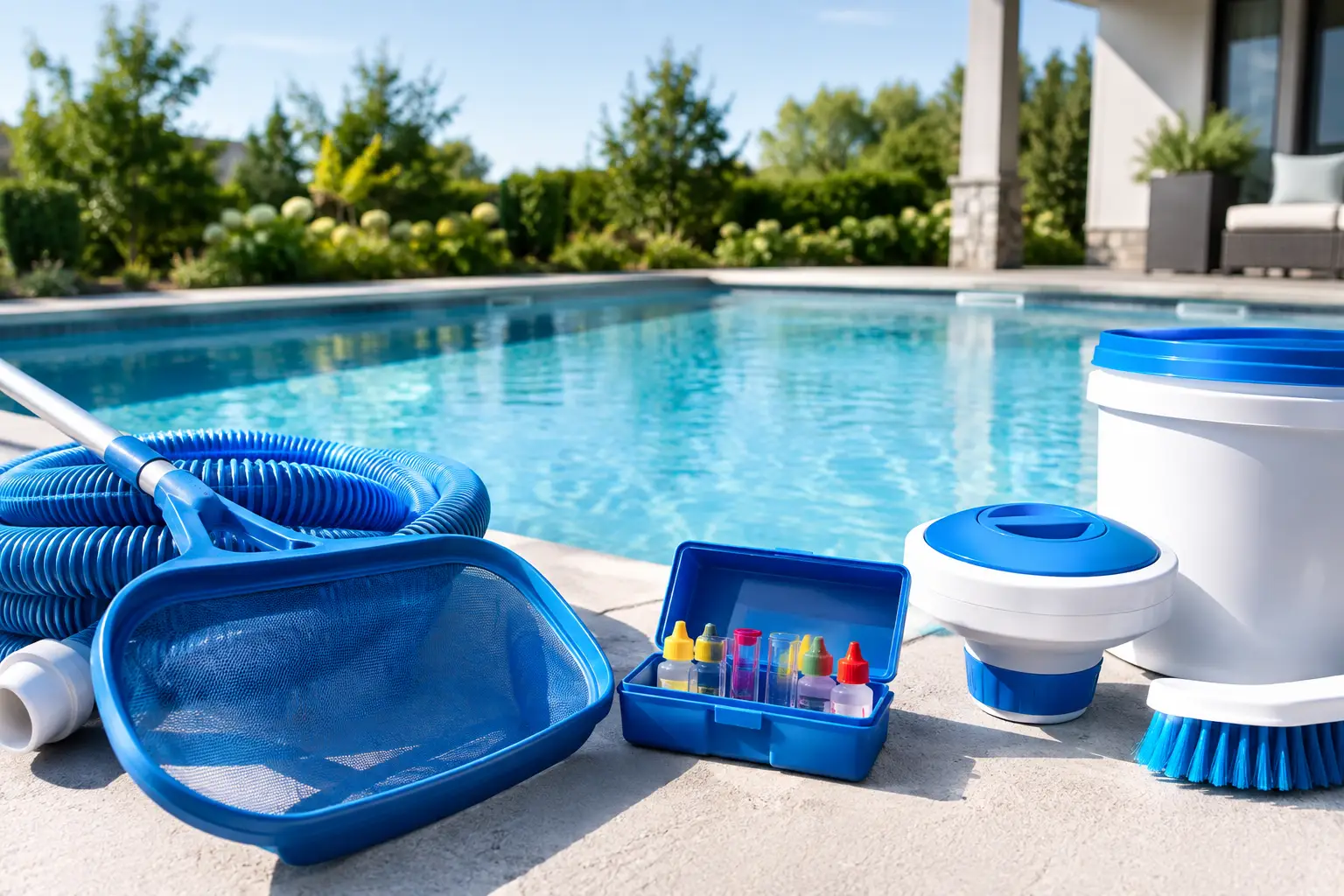
Professional Pool Opening in Northern Virginia: Start the Season with Confidence
By Ashton DeBosky, Owner of The Pool Sharks LLC Serving pool owners throughout Loudoun, Fairfax, Prince William and Fauquier counties.
The first warm weekend in Northern Virginia makes a covered swimming pool feel like unfinished business. But preparing a pool for spring involves more than removing the cover and turning on the pump.
A professional pool opening brings the water, circulation system and seasonal equipment back into operation in a deliberate sequence. For homeowners in Leesburg, Ashburn, Great Falls, McLean and surrounding communities, that preparation can make the difference between an orderly start and weeks of avoidable cleanup.
At The Pool Sharks, we approach pool openings as the beginning of a season-long care plan. Our company combines attentive service with the hands-on perspective of Jason DeBosky, whose pool-building, remodeling and service experience spans more than 30 years.
Our focus is concrete and gunite swimming pools, their plaster and aggregate finishes, and the equipment that keeps them operating properly.
Why Northern Virginia Pools Need a Thoughtful Spring Opening
Northern Virginia winters expose pools to freezing temperatures, fluctuating weather and extended periods without normal circulation. Conditions beneath the cover can change even when the pool was properly winterized.
Leaves and organic material may accumulate. Water chemistry may shift. Equipment seals, fittings and above-ground plumbing may reveal problems when circulation resumes.
Spring brings another challenge: pollen, falling blossoms, seed pods and warming water. Waiting until the first planned swimming weekend leaves little room for cleanup, water adjustment or equipment repairs.
A professional opening helps establish the pool’s condition before the season places greater demands on it. The goal is dependable operation and a manageable path to swimming readiness.
What a Professional Pool Opening Includes
The exact scope depends on the pool, cover, equipment and conditions found at the property. Any additional repairs or recovery work should be identified and explained rather than assumed to be included.
1. Careful Cover Removal
An opening begins with the cover and its surroundings.
Where applicable, accumulated debris and standing water should be managed before removal to reduce the amount entering the pool. Mesh safety covers and solid covers require different handling, and the cover’s condition should guide the process.
Cover handling may include:
- Removing accumulated debris.
- Carefully releasing and removing the cover.
- Checking accessible anchors, straps and hardware.
- Cleaning and preparing the cover for storage as included in the service scope.
- Identifying visible wear or damage.
Proper storage depends on the cover manufacturer’s instructions and the conditions at the property. A wet or dirty cover should not simply be packed away without considering those requirements.
Once the pool is uncovered, its visible surfaces, waterline tile, coping and accessible fittings can be observed for winter-related concerns.
2. Reconnecting Winterized Components
Before startup, winterized components must be returned to their operating configuration.
Depending on the system, this may involve reinstalling drain plugs, reconnecting equipment unions, removing winterization plugs, restoring return fittings and checking valve positions.
The water must be at an appropriate operating level before the pump is started. Accessible connections should be checked, and the pump should be