
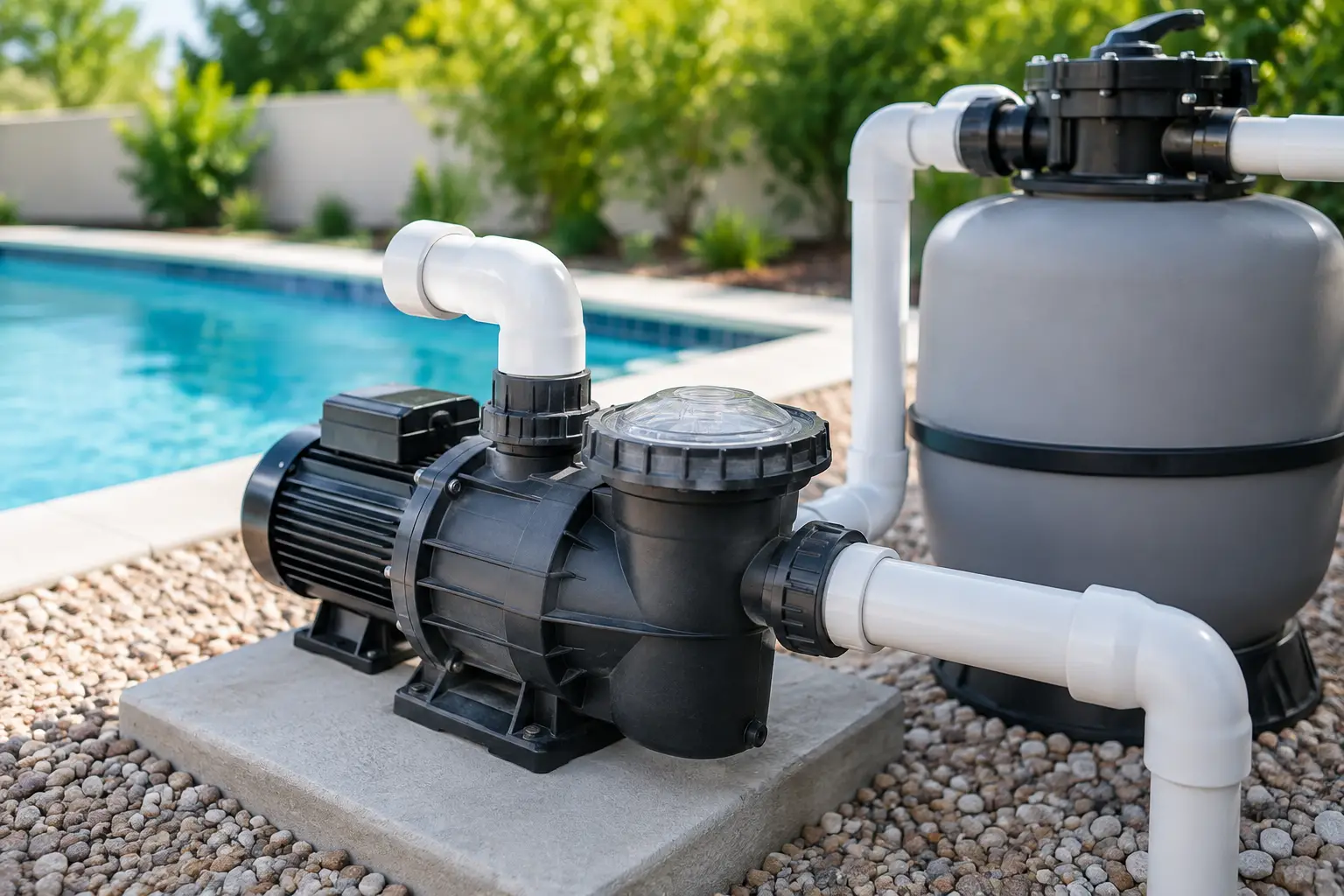
Pool Pump Failure: Warning Signs, Causes, and When to Call a Professional
By Jason DeBosky | The Pool Sharks
A quiet equipment pad is not always a good sign. When your pool pump unexpectedly stops, loses circulation, or begins making unfamiliar noises, the entire pool care system can be affected.
Your pump moves water through the filter and supplies the flow your heater and sanitation equipment need to operate properly. Without dependable circulation, debris accumulates, water treatment becomes less effective, and a pool that looked pristine yesterday can quickly require attention.
For homeowners across Northern Virginia, recognizing the early signs of pool pump trouble can help prevent unnecessary damage and restore reliable operation sooner. Here is what to watch for, what you can safely observe, and how to decide whether repair or replacement makes sense.
Early Warning Signs of Pool Pump Trouble
Most pump problems reveal themselves through changes in sound, water movement, or operating behavior. Catching those changes early gives your technician a better opportunity to address the cause before additional components are damaged.
Unusual Noise
A pool pump should have a familiar, consistent operating sound at a given speed. A new high-pitched whine, grinding noise, rattling, or pronounced vibration deserves attention.
Possible causes include worn motor bearings, debris in the impeller, loose components, or air entering the system. The sound alone does not confirm the diagnosis, but it is a useful warning.
Weak Circulation
Reduced movement at the return jets, poor skimmer action, and debris lingering on the surface may indicate a circulation problem.
The cause could be a clogged basket, dirty filter, suction leak, valve position, pump setting, or an issue inside the pump itself. Clear water does not rule out a developing problem.
Air in the System
Persistent bubbles at the returns or a pump basket that will not remain properly filled can indicate air entering the suction side of the system.
Low pool water, a damaged lid O-ring, or a leaking suction fitting may be responsible. A technician should identify the source before assuming the pump needs replacement.
Unreliable Starting or Repeated Shutdowns
A pump that hums without starting, repeatedly shuts down, displays an error, or trips a breaker needs professional evaluation.
Do not repeatedly reset a breaker or restart a struggling pump. Electrical faults, overheating, and motor problems require a proper diagnosis.
Common Causes of Pool Pump Failure
Pool equipment works through Northern Virginia’s summer heat, heavy rain, falling leaves, and seasonal temperature changes. Age contributes to wear, but operating conditions and maintenance also affect reliability.
Loss of Prime and Suction Leaks
A pump needs an adequate supply of water and a sealed suction path. When air enters through a loose lid, worn O-ring, cracked fitting, or low water level, the pump may struggle to establish or maintain prime.
Running without sufficient water can damage the mechanical seal and other pump components. If the pump will not prime, turn it off and arrange for service.
Correcting the air leak may restore normal operation without replacing the pump.
Clogged Baskets, Impellers, or Filters
Leaves and debris can restrict water movement through the skimmers, pump basket, or impeller. A dirty filter can also reduce circulation.
These restrictions affect system performance and may create symptoms that resemble pump failure. Depending on where the restriction occurs, filter pressure may rise or fall.
A thorough diagnosis checks the entire circulation system. Replacing a pump without addressing the underlying restriction can leave the original problem unresolved.
Motor, Drive, or Electrical Problems
Motor bearings wear, electrical connections deteriorate, and electronic controls can develop faults.
On some motors, a failed capacitor can cause humming without startup. Variable-speed pumps may display drive or protection errors that require a different diagnostic approach.
Because equipment designs vary, the correct repair depends on the specific pump, its controls, and the electrical supply.
Mechanical Seal or Housing Leaks
The mechanical shaft seal helps keep pool water from reaching the motor. A leak near the connection between the wet end and motor can indicate seal failure.
Other leaks may come from the lid, drain plugs, plumbing connections, or pump housing. Identifying the exact source matters: a replaceable seal and a cracked housing present very different repair decisions.
Persistent moisture near the motor should be addressed promptly.
What to Do When Your Pool Pump Stops Working
If you notice grinding, a burning odor, smoke, repeated breaker trips, or water leaking near electrical components, shut the equipment off if you can do so safely and request professional service.
For a circulation issue without an immediate safety concern, a few observations can help your technician prepare:
- Check whether the pool water is at its normal operating level.
- Look through the closed pump lid for excessive air or a basket chamber that is not filling.
- Record any controller error message.
- Note the filter pressure and whether it differs from the normal reading at the same pump speed.
- Photograph visible leaks from a safe position.
- Describe when the problem began and whether anything recently changed.
Keep the pump off if it cannot maintain prime. Avoid opening electrical compartments, bypassing protective controls, or repeatedly cycling power.
Before opening a pump lid or filter, the equipment must be switched off and system pressure safely relieved according to the manufacturer’s instructions. If you are unfamiliar with that procedure, leave it to your technician.
Should You Repair or Replace Your Pool Pump?
A malfunction does not automatically mean you need a new pump.
A damaged O-ring, worn mechanical seal, clogged impeller, or certain motor components may be repairable when the rest of the equipment remains in good condition.
Replacement becomes more practical when there is a cracked housing, extensive corrosion, repeated breakdowns, unavailable parts, or a repair cost that is difficult to justify against the equipment’s remaining life.
Energy use should also be considered. A properly selected and programmed variable-speed pool pump can reduce electricity consumption compared with an older single-speed model. Actual savings depend on the existing equipment, operating schedule, electricity rates, and the pool’s flow requirements.
The right replacement must work with your plumbing, filter, heater, sanitation equipment, water features, and automation. More horsepower alone does not guarantee better performance.
At The Pool Sharks, we evaluate the system and explain the practical repair and replacement options so you can make an informed decision.
How Routine Service Helps Prevent Pump Problems
Consistent maintenance makes changes easier to spot.
During weekly pool service, basket condition, water level, circulation, visible leaks, and equipment behavior provide useful clues about system health.
Filter maintenance should follow the manufacturer’s guidance and account for changes in operating pressure and flow. Pump schedules should support the pool’s filtration and sanitation needs while supplying sufficient flow for connected equipment.
Keeping the equipment pad accessible also helps. Clear vegetation away from motor ventilation, maintain drainage, and avoid storing items against equipment. A clean pad makes small leaks and developing problems easier to notice.
For pools that remain operational through colder weather, appropriate winter monitoring and freeze protection are also essential.
Restore Reliable Circulation With The Pool Sharks
Your pool should be ready for the way you use it, whether that means a quiet afternoon outside or a weekend with family and friends.
If your pump is unusually loud, leaking, losing prime, or refusing to stay running, The Pool Sharks can evaluate the problem and recommend the next step.
We provide pool equipment diagnostics, repairs, upgrades, and ongoing care throughout Loudoun, Fairfax, Fauquier, and Prince William counties.
Call The Pool Sharks at (703) 452-2788 to schedule pool pump service.
The Pool Sharks — Where Luxury Meets Peace of Mind.