Should You Repair or Replace Pool Equipment in Northern Virginia?
By Ashton DeBosky | Owner, The Pool Sharks Published by The Pool Sharks
Pool equipment problems rarely happen at a convenient time. The pump may begin making an unusual noise before a weekend gathering. The heater may stop working as evening temperatures fall. The water may lose clarity because the filter or sanitation system is no longer performing correctly.
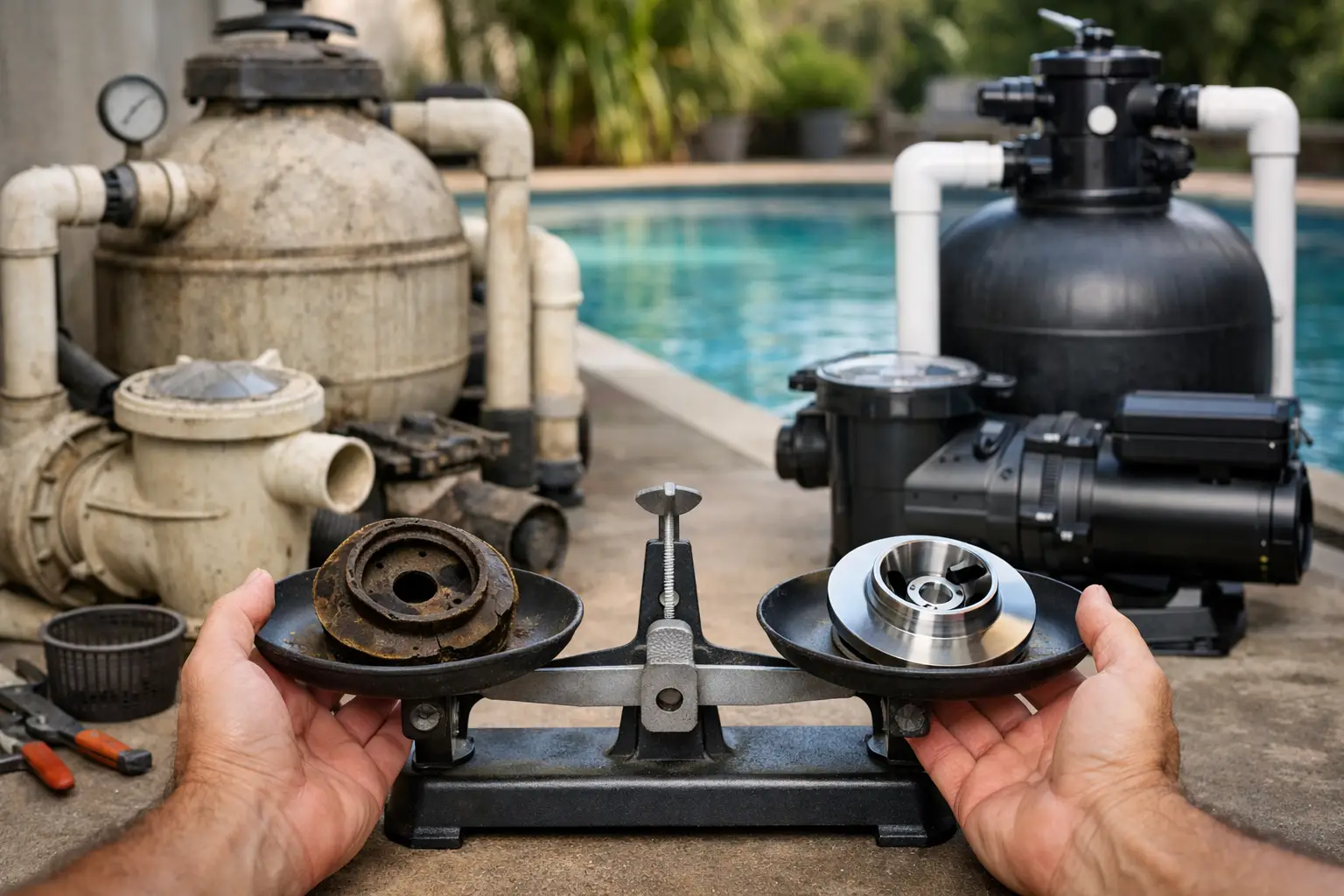
When this happens, Northern Virginia homeowners must decide whether to repair the existing equipment or invest in a replacement. The least expensive option today is not always the best long-term value. The right decision should restore dependable operation, protect the pool, and reduce the likelihood of repeated interruptions.
The Pool Sharks evaluates the immediate failure along with the equipment’s age, condition, efficiency, repair history, compatibility, and expected remaining service life. This complete assessment helps homeowners make a confident decision based on the entire pool system.
Evaluate the Entire Pool Equipment System
Pool equipment operates as a connected system. The pump circulates the water, the filter removes debris, the heater controls temperature, and the sanitation system helps maintain safe, inviting water.
When one component struggles, it can affect everything connected to it.
A failing pump may not provide enough flow through the filter, heater, or salt-chlorine system. A dirty or damaged filter can restrict circulation and force the pump to work harder. An aging salt cell may produce insufficient chlorine, allowing the water to become cloudy or vulnerable to algae.
The visible problem may only be one part of the issue. A professional assessment should determine whether the failed component caused the problem, suffered damage from another condition, or revealed a larger system deficiency.
This does not mean every repair should become a complete equipment-pad replacement. Many isolated problems can be corrected effectively. The important question is whether the proposed repair will restore dependable performance or merely postpone another failure.
When Pool Equipment Repair Makes Sense
Repair is often the best choice when the equipment is relatively new, properly sized, and has otherwise performed reliably.
Examples of repairable pool equipment problems may include:
- A worn pump seal
- A failed motor capacitor
- A minor plumbing leak
- A defective pressure gauge
- A damaged flow sensor
- A faulty temperature sensor
- A replaceable control board
- An isolated heater ignition problem
- A malfunctioning valve actuator
A targeted repair may provide years of additional service when the main equipment remains in good condition. This is especially true when the repair addresses the root cause and does not represent part of a recurring pattern.
Repair may also be preferable when the existing equipment is compatible with the pool’s plumbing, electrical service, automation, and hydraulic requirements. Replacing one component can sometimes require additional modifications, so the expected benefits should justify the full installation cost.
The Pool Sharks explains what failed, why it failed, and whether the remaining equipment appears dependable. Homeowners can then distinguish necessary repairs from optional upgrades without making a rushed decision.
Learn more about our pool equipment repair services in Northern Virginia.
When Pool Equipment Replacement Offers Better Value
Eventually, continued repair becomes more expensive and disruptive than replacement. Equipment near the end of its useful life may remain repairable, but the cost should be weighed against its efficiency, reliability, and likelihood of another failure.
Replacement should be considered when:
- The equipment has required multiple recent repairs.
- A major component has failed on an older unit.
- Replacement parts are obsolete or difficult to locate.
- Corrosion has compromised the equipment.
- The filter tank shows structural deterioration.
- The heater has a damaged or leaking heat exchanger.
- The pump is excessively noisy or repeatedly loses prime.
- The equipment is inefficient or improperly sized.
- The existing system is incompatible with planned upgrades.
A repair that restores dependable operation can be valuable. Repeated repairs that keep unreliable equipment running for only a short period can become a false economy.
Homeowners should consider the total cost of ownership, including repair bills, electricity consumption, emergency service, water-quality problems, and the inconvenience of losing access to the pool.
Consider the Equipment’s Age and Condition
Age is an important factor, but it should not determine the decision by itself. Pool pumps, filters, heaters, automation systems, and salt-chlorine generators have different expected service lives. Actual longevity depends on installation quality, water chemistry, usage, ventilation, maintenance, and winterization.
A newer unit that has operated under poor conditions may be a poor repair candidate. An older unit that has been properly installed and professionally maintained may still provide reliable service.
The physical condition often tells more than the installation date. A qualified technician should look for:
- Corrosion
- Water leaks
- Air entering the system
- Unusual vibration or noise
- Burned or damaged wiring
- Restricted circulation
- Cracked housings or fittings
- Inconsistent heater operation
- Communication or automation failures
- Reduced sanitizer production
A complete inspection helps determine whether the failure is isolated or evidence of broader deterioration.
Water Chemistry Can Shorten Equipment Life
Improperly balanced pool water can damage heaters, salt cells, seals, fittings, and metal components. Low pH or aggressive water may accelerate corrosion. High calcium levels can contribute to scale inside heaters, plumbing, and salt cells.
Poor circulation and inconsistent sanitizer levels can also create conditions that strain equipment and make the water more difficult to manage.
Before replacing damaged equipment, the underlying water conditions should be identified and corrected. Otherwise, the same problem may affect the new component.
Our pool water chemistry guide explains why professional testing and consistent balancing are essential to protecting both the water and the equipment.
Compare Energy Efficiency and Operating Costs
Older single-speed pumps can consume considerably more electricity than modern variable-speed pumps. A variable-speed pump can operate at lower speeds for routine circulation and increase speed only when additional flow is needed.
Potential advantages include:
- Lower energy consumption
- Quieter operation
- Improved filtration
- Adjustable circulation
- Better control of water features
- More flexible operating schedules
The pump must still be properly selected and programmed for the pool. A new pump that is incorrectly sized or configured may not produce the expected results.
Efficiency also applies to heaters, automation, and sanitation systems. Modern equipment may provide better scheduling, easier monitoring, more consistent temperatures, and improved control over the complete pool environment.
For pools near patios, outdoor kitchens, guest spaces, or bedroom windows, quieter equipment can materially improve the enjoyment of the property.
Consider Your Future Plans for the Pool
The repair-or-replace decision should reflect how the pool will be used over the next several years.
If you plan to remodel the pool, extend the swimming season, add a spa, install water features, or upgrade the automation, replacing aging equipment may prevent duplicated work later.
A future equipment plan might include:
- Variable-speed circulation
- Smartphone automation
- Updated pool and spa controls
- New heating equipment
- Improved filtration
- Salt-chlorine generation
- Automated lighting
- Additional water features
Installing a replacement that cannot support the future design may create another unnecessary expense. Equipment selection should account for the pool’s current requirements and the homeowner’s long-term plans.
If a larger transformation is being considered, explore our Northern Virginia pool remodeling services.
Ask the Right Questions Before Authorizing Work
Before deciding, ask:
- What caused the equipment to fail?
- Will the repair correct the root cause or only the symptom?
- Has this unit required other recent repairs?
- What is its realistic remaining service life?
- Are replacement parts readily available?
- Is the equipment properly sized for the pool?
- Would replacement improve efficiency or reliability?
- Will the proposed equipment support future upgrades?
- What warranty applies to the repair or replacement?
Clear answers make it easier to compare immediate cost with long-term value.
Prevent Emergency Failures With Regular Maintenance
Equipment decisions are easier when developing problems are identified before a complete breakdown.
During professional service, a technician can monitor:
- Pump pressure and circulation
- Filter performance
- Heater response
- Plumbing leaks
- Unusual equipment noise
- Automation communication
- Salt-cell output
- Valves and actuators
- Water chemistry
These observations help homeowners plan repairs or upgrades before the equipment fails during a gathering, vacation, or period of severe weather.
Review our pool equipment maintenance guide or learn about weekly pool service from The Pool Sharks.
Pool Equipment Service in Northern Virginia
The Pool Sharks provides professional pool equipment assessment, repair, replacement, and maintenance throughout Northern Virginia, including Ashburn, Leesburg, Great Falls, McLean, Vienna, Haymarket, Gainesville, Warrenton, Purcellville, and Fairfax Station.
Our goal is not simply to keep failing equipment operating for another day. We help homeowners create reliable, efficient pool systems that protect the water, the property, and the complete backyard experience.
Repair makes sense when a focused solution restores dependable performance. Replacement makes sense when improved reliability, efficiency, compatibility, and peace of mind justify the investment.
Request a professional pool equipment assessment from The Pool Sharks.
The Pool Sharks — Where Luxury Meets Peace of Mind.