
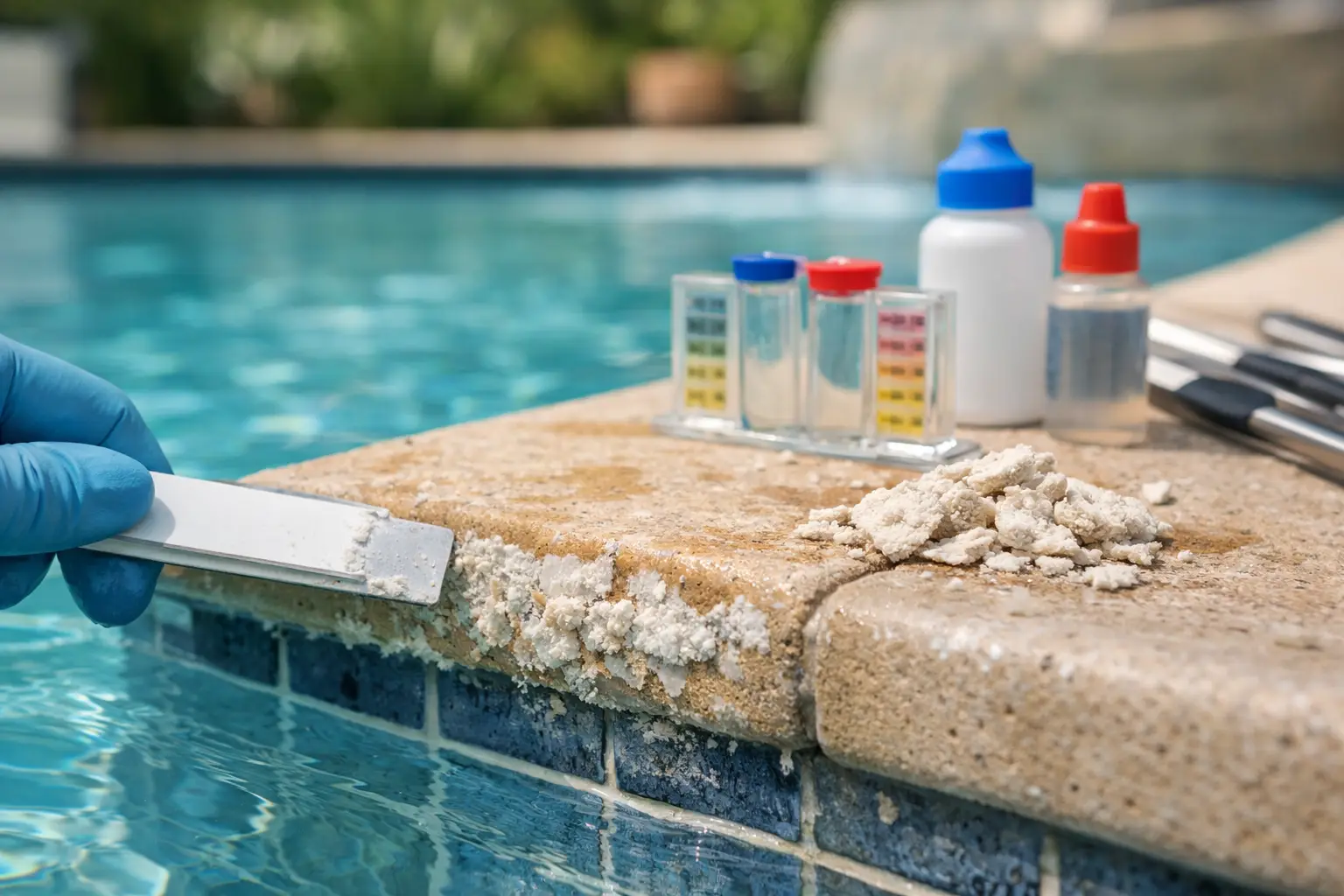
Pool Scale Causes in Northern Virginia: Prevention, Removal, and Professional Care
By Jason DeBosky | 30-Year Pool Industry Veteran Published by The Pool Sharks
A chalky white ring at the waterline, rough patches on plaster, or pale deposits around pool returns can quickly diminish an otherwise beautiful swimming pool. The most common pool scale causes include mineral-rich fill water, elevated pH, excessive calcium hardness, heat, and evaporation.
For Northern Virginia homeowners, changing weather, long periods of summer heat, repeated topping-off, and differences between municipal and well water can all affect mineral concentration. Left untreated, scale can dull premium finishes, restrict circulation, reduce heater efficiency, damage salt cells, and turn routine maintenance into an expensive restoration project.
The Pool Sharks approaches scale as a water-balance and equipment-protection issue—not simply a cosmetic cleaning problem.
What Is Pool Scale?
Pool scale is a hardened mineral deposit that separates from the water and attaches to tile, plaster, stone, fittings, plumbing, salt cells, heaters, and other equipment. Calcium carbonate is the most common form, although metals and other minerals can affect the deposit’s color and texture.
Scale may appear as:
- A chalky white waterline
- Rough gray or white patches on plaster
- Crusty deposits around returns and fittings
- White buildup on spillways or water features
- Flaky material on salt-cell plates
- Brown or discolored deposits when metals are present
The waterline is especially vulnerable because evaporation removes water while leaving dissolved minerals behind. As evaporation and refilling continue, the mineral concentration increases.
Not every white mark is scale. Sunscreen, body oils, dirt, and other residue can resemble mineral buildup. Organic residue usually responds to ordinary cleaning, while scale feels rough and resists normal brushing. Identifying the material correctly helps prevent unnecessary acid treatment or damage to tile, stone, plaster, and specialty finishes.
The Most Common Pool Scale Causes
Hard Fill Water and Rising Mineral Levels
Hard water contains elevated levels of calcium and magnesium. Depending on the Northern Virginia property, a pool may be filled from municipal water, a private well, or a combination of sources.
When pool water evaporates, the minerals remain. Every addition of fill water introduces more minerals, causing calcium hardness and total dissolved solids to rise gradually. Pools exposed to direct sunlight, warm temperatures, and extended operating seasons may experience this concentration more quickly.
Hard water does not automatically mean the pool will develop scale. It means the chemistry must be monitored and managed deliberately.
High pH and Total Alkalinity
Calcium can remain dissolved when the water is properly balanced. When pH rises, calcium becomes more likely to leave the water and attach to pool surfaces.
High total alkalinity can make pH difficult to control, allowing scaling conditions to continue between service visits. This is why crystal-clear water is not necessarily balanced water. A pool may look clean while minerals are beginning to accumulate inside the heater, plumbing, salt cell, or water features.
Professional pool chemical balancing considers pH, alkalinity, calcium hardness, sanitizer levels, temperature, and the pool’s finish as one connected system.
Heat and Evaporation
Warm water encourages calcium scale, particularly when pH and calcium hardness are already elevated. Northern Virginia pools can experience significant evaporation during hot, dry weather, concentrating minerals as the water level falls.
Heated pools and spas face additional risk because higher water temperatures make calcium less soluble. Scale can form inside heater components before the homeowner notices deposits in the pool.
A heater that takes longer to warm the water, makes unusual noises, or experiences reduced flow should be evaluated before continued operation creates additional damage.
Spillovers and Water Features
Spillover spas, fountains, waterfalls, sheer descents, and raised walls continuously expose thin layers of water to air. That increases evaporation and often makes these areas the first visible location for scale.
White residue on stone, tile, or spillway edges may signal a broader water-balance issue. Natural stone requires particular care because aggressive acids and abrasive tools can permanently etch, bleach, or discolor the surface.
Saltwater Pool Operation
Saltwater pools can still develop calcium scale. The chlorine-generation process creates localized conditions inside the salt cell that can encourage calcium accumulation, particularly when the pool’s pH naturally drifts upward.
Scale coating the cell plates reduces chlorine production and makes the system work harder. Frequent acid cleaning is not the ideal solution because excessive acid exposure can shorten cell life.
Correct water balance, visual inspection, and cleaning only when required provide better long-term protection for the salt system.
Improper Chemical Addition
Adding chemicals too quickly, placing concentrated products directly against a pool surface, or correcting one test result without considering the entire chemistry profile can produce localized imbalance.
The correct treatment depends on:
- Pool volume
- Surface material
- Water temperature
- Calcium hardness
- Total alkalinity
- Sanitizer system
- Source-water chemistry
- Recent rainfall and evaporation
- Chemicals previously added
Responsible pool care involves more than adding products until a test strip changes color.
Why Pool Scale Requires Prompt Attention
At the waterline, scale makes a maintained pool appear neglected. On plaster or aggregate finishes, deposits can create an uncomfortable texture and conceal the original color and sheen. The longer scale remains, the more firmly it can bond to the surface.
Equipment damage is the larger concern. Scale can:
- Restrict plumbing and water passages
- Reduce return flow
- Coat filter components
- Interfere with sensors
- Reduce salt-cell output
- Insulate heater surfaces
- Increase operating time and energy consumption
- Contribute to premature equipment failure
Fresh deposits are generally easier to manage than hardened accumulation. Once scale becomes established, removal may require specialized treatment selected for the specific surface. Metal scrapers, pumice, aggressive blasting, and strong acids are not appropriate for every pool.
How Professional Pool Service Prevents Scale
Scale prevention depends on consistent monitoring rather than occasional correction. Professional water analysis identifies movement in pH, alkalinity, calcium hardness, and sanitizer performance before deposits become severe.
A complete maintenance visit should also include:
- Inspection of the waterline and fittings
- Brushing appropriate for the pool finish
- Circulation and return-flow checks
- Filter-pressure monitoring
- Salt-cell inspection when applicable
- Heater and equipment observations
- Review of recent water additions or weather changes
The Pool Sharks’ weekly pool service is designed to protect the entire pool environment, including the finish, water quality, circulation system, and equipment.
Persistent scaling may require controlled water replacement, surface-specific treatment, professional equipment cleaning, or a revised chemistry plan. The correct response should be based on the individual pool rather than a universal chemical treatment.
Warning Signs Homeowners Should Watch
Between service visits, watch for:
- A white waterline that quickly returns after cleaning
- Roughness on steps, benches, tile, or plaster
- White deposits around returns or spillways
- Reduced water flow
- Visible salt-cell buildup
- Rising filter pressure
- A heater taking longer to reach temperature
- Repeated upward movement in pH
Avoid scraping deposits with metal tools or pouring acid directly onto the affected surface. These methods can leave permanent scratches, discoloration, or etched finishes.
If substantial fill water has recently been added, tell your pool professional. That information may help explain a sudden shift in calcium hardness or water balance.
Protect Your Northern Virginia Pool
Pool scale is easier and less expensive to prevent than to remove after it hardens. Consistent testing, precise chemical adjustments, proper circulation, and early intervention help preserve the pool’s finish and extend equipment life.
The Pool Sharks provides professional pool maintenance, chemical balancing, equipment care, and renovation services for discerning Northern Virginia homeowners. Our goal is to keep your pool looking composed, operating efficiently, and ready to enjoy throughout the season.
If you notice chalky deposits, rough surfaces, salt-cell buildup, or declining heater performance, contact The Pool Sharks for a professional evaluation.
Where Luxury Meets Peace of Mind.
Continue Exploring Pool Care
Continue with weekly pool maintenance, Why Is Pool Water Cloudy? Causes and Clear Fixes, How to Balance Pool Alkalinity With Confidence, Northern Virginia service areas, and request private client access. These resources help Northern Virginia homeowners connect practical guidance with the appropriate professional service.