
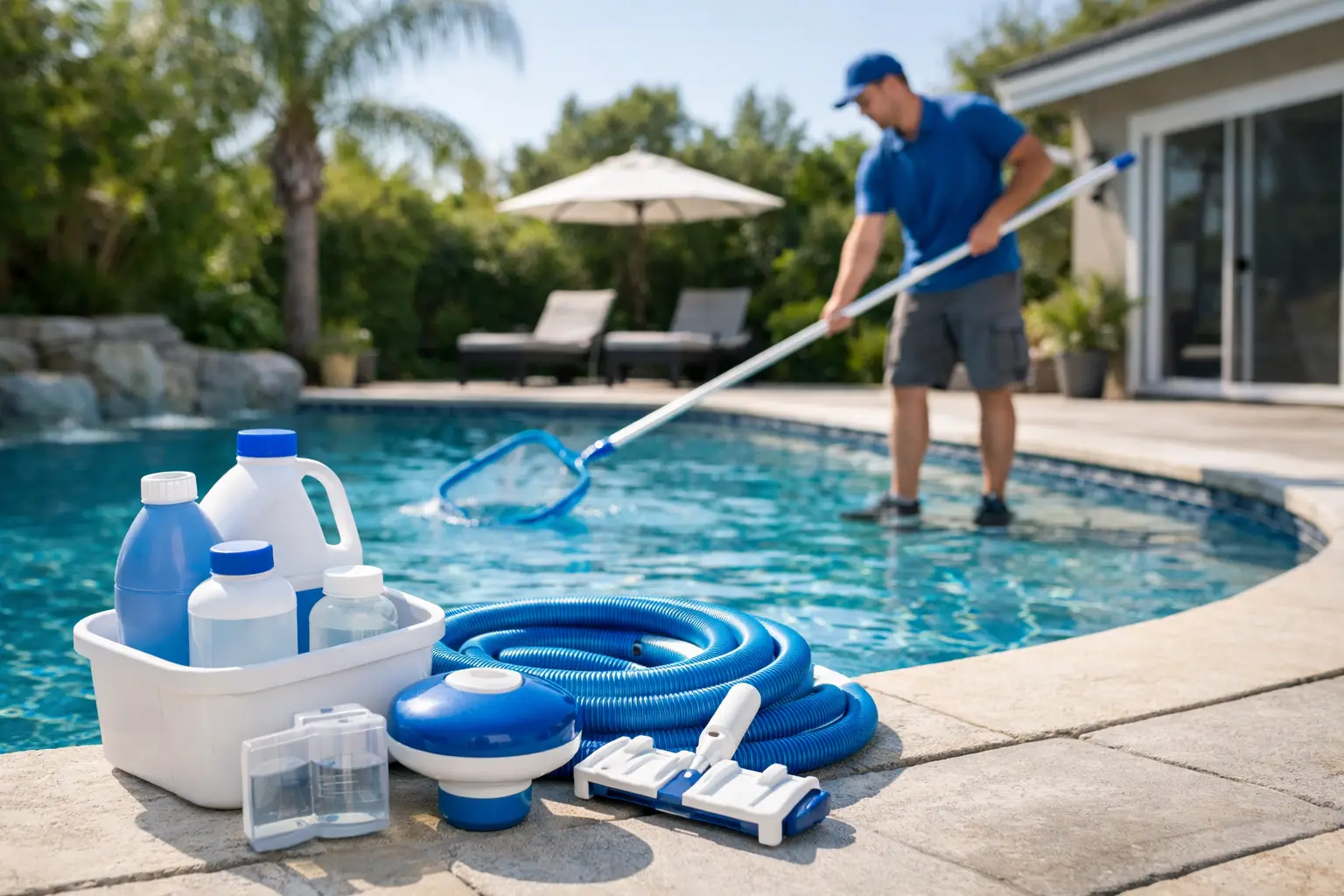
Professional Pool Maintenance Guide | Concierge Pool Care for Luxury Pools in Northern Virginia
By Jason DeBosky | 30-Year Pool Industry Veteran Published by The Pool Sharks
A swimming pool can appear perfectly clear while hidden water chemistry issues, restricted circulation, or aging equipment quietly develop into expensive repairs. Crystal-clear water is only one indicator of a healthy pool. Professional pool maintenance protects the entire swimming pool system, preserving water quality, extending equipment life, and helping homeowners avoid unexpected breakdowns.
At The Pool Sharks, we believe luxury pool ownership should feel effortless. Our concierge pool maintenance services help homeowners throughout Leesburg, Ashburn, Great Falls, McLean, Vienna, Reston, Herndon, Chantilly, Centreville, Gainesville, Haymarket, Warrenton, Purcellville, Aldie, and throughout Loudoun, Fairfax, Prince William, and Fauquier Counties enjoy beautiful pools without the stress of managing every detail themselves.
Whether your pool features premium plaster, exposed aggregate, quartz, PebbleTec®, Wet Edge®, automation, waterfalls, or an attached spa, proper maintenance protects every component that makes your backyard exceptional.
---
Professional Pool Maintenance Is More Than Keeping Water Clear
Many homeowners assume weekly pool service simply means skimming leaves and adding chlorine. While those tasks are important, they represent only a small portion of proper pool care.
Every swimming pool functions as one integrated system. Water chemistry affects equipment. Equipment affects circulation. Circulation affects sanitation. Sanitation protects plaster, tile, and finishes. When one area begins to fail, problems often spread throughout the entire system.
Professional maintenance should include continual evaluation of:
- Water chemistry
- Circulation performance
- Filtration efficiency
- Sanitizer effectiveness
- Equipment operation
- Surface condition
- Water level
- Developing repair needs
This proactive approach helps identify small concerns before they become expensive repairs.
If you'd like to understand how often a pool should be professionally maintained, visit our How Often Should Pools Be Serviced? guide.
---
Water Chemistry Protects Your Entire Pool
Balanced water does much more than keep swimmers comfortable.
Proper chemistry protects:
- Pool plaster
- Pebble finishes
- Quartz finishes
- Tile
- Coping
- Pumps
- Heaters
- Salt chlorine generators
- Filters
- Stainless steel fixtures
- Decorative water features
Professional testing evaluates much more than chlorine alone.
Every service visit should include analysis of:
- Free Chlorine
- Combined Chlorine
- pH
- Total Alkalinity
- Calcium Hardness
- Cyanuric Acid
- Salt Level
- Water Temperature
- Saturation Index
Simply adding more chlorine without understanding the entire chemical balance often masks the real issue instead of correcting it.
High pH can dramatically reduce sanitizer efficiency.
Improper calcium hardness may lead to scale formation or surface deterioration.
High stabilizer levels can reduce chlorine effectiveness.
Each reading influences the others.
Our Pool Water Chemistry Guide explains these relationships in greater detail.
---
Weekly Cleaning Keeps Problems From Developing
Routine cleaning is about far more than appearance.
Organic debris consumes chlorine, stains finishes, clogs baskets, and increases filter loading.
Professional weekly service typically includes:
- Surface skimming
- Brushing walls
- Brushing steps
- Brushing tanning ledges
- Cleaning benches
- Vacuuming debris
- Cleaning the tile line
- Emptying skimmer baskets
- Emptying pump baskets
Areas with poor circulation—including corners, behind ladders, steps, benches, and tanning shelves—are often the first places algae begins to establish itself.
Regular brushing prevents algae before chemical treatment becomes necessary.
Many homeowners ask whether automatic cleaners eliminate the need for professional service.
The answer is no.
Automatic cleaners remove much of the visible debris, but they cannot inspect equipment, evaluate chemistry, recognize developing leaks, or identify early warning signs that experienced technicians notice during every visit.
You can learn more in our article comparing Pool Service vs. Pool Cleaning.
---
Proper Circulation Is Essential
Clear water does not always mean healthy circulation.
A pool may look beautiful while water flow is gradually decreasing because of:
- Dirty filters
- Restricted plumbing
- Worn pump components
- Air leaks
- Blocked baskets
- Improper valve settings
Poor circulation reduces sanitizer effectiveness and places unnecessary stress on the entire system.
During professional maintenance, technicians should inspect:
- Pump operation
- Pump basket
- Pump lid seal
- Filter pressure
- Return flow
- Skimmer performance
- Visible plumbing
- Valve positions
- Water level
Changes in pressure or flow often reveal developing problems long before complete equipment failure occurs.
---
Filter Maintenance Requires Professional Judgment
Every filter system requires routine maintenance, but no two pools accumulate debris at exactly the same rate.
Cleaning schedules depend on:
- Pool usage
- Tree coverage
- Weather
- Filter type
- Pressure readings
- Water clarity
Cartridge filters, DE filters, and sand filters each require different maintenance procedures.
Cleaning too late restricts circulation.
Cleaning too frequently may reduce filtration efficiency on certain systems.
Professional evaluation helps determine the proper cleaning interval instead of relying on a fixed calendar schedule.
Our Pool Filter Cleaning Services explain the differences between each filtration system.
---
Equipment Problems Usually Begin Quietly
Most expensive pool repairs begin with small warning signs.
Examples include:
- Slight pump noise
- Minor shaft seal leaks
- Air bubbles inside the pump basket
- Heater cycling inconsistently
- Salt system flow errors
- Worn O-rings
- Small plumbing drips
- Weak return flow
These issues rarely stop the pool immediately.
Instead, they gradually worsen over weeks or months until an unexpected failure interrupts your swimming season.
Concierge pool maintenance focuses on identifying these problems early, allowing repairs to be scheduled before they become emergencies.
For homeowners, that means fewer unexpected expenses and greater confidence that the pool will be ready whenever family and guests arrive.
Pumps, Heaters, and Salt Systems Deserve Routine Attention
Your pool equipment operates every day, even when nobody is swimming. Routine inspections help identify wear before it develops into costly repairs.
During professional maintenance, technicians should evaluate:
- Pump operation and motor performance
- Filter pressure and water flow
- Heater operation
- Salt chlorine generator performance
- Automation controls
- Valves and actuators
- Plumbing connections
- Water features
- Timers and schedules
The goal is simple—keep every component operating together efficiently.
If your pump begins making unusual noises, develops air bubbles, or loses prime, scheduling service early is almost always less expensive than waiting for complete failure. Our Pool Pump Repair & Replacement services help homeowners diagnose and correct circulation problems before they affect water quality.
Likewise, pool heaters should be inspected before temperatures begin to cool. A heater may appear to operate normally until the first chilly evening of the season reveals ignition, sensor, or flow issues. Our Pool Heater Repair service helps ensure your heater is ready when you need it.
Saltwater pools also require professional attention. A salt chlorine generator produces chlorine automatically, but it does not replace water testing, balancing, brushing, filter maintenance, or equipment inspections. Salt cells should be evaluated regularly for calcium buildup, proper flow, and overall performance. Learn more about our Salt System Cleaning & Maintenance services.
---
Recognizing the Early Signs of a Pool Leak
Every swimming pool loses some water through normal evaporation, especially during hot Northern Virginia summers.
However, excessive water loss deserves professional evaluation.
Signs that may indicate a leak include:
- Frequently adding water
- Air entering the circulation system
- Wet soil near equipment
- Water level dropping below the skimmer
- Cracks developing around the pool deck
- Higher-than-normal chemical consumption
Early leak detection helps prevent additional damage to plumbing, equipment, decking, and surrounding soil.
If you suspect your pool may be leaking, our Pool Leak Detection specialists can determine whether the water loss is normal evaporation or a developing plumbing or structural issue.
---
Seasonal Pool Care Protects Your Investment
Opening and closing a swimming pool properly is one of the most important parts of long-term pool ownership.
Every season presents different challenges throughout Leesburg, Ashburn, Great Falls, McLean, Vienna, Reston, Herndon, Gainesville, Haymarket, Warrenton, and the surrounding Northern Virginia communities.
Professional spring openings typically include:
- Removing and cleaning the winter cover
- Inspecting equipment
- Reinstalling accessories
- Starting the circulation system
- Cleaning debris
- Brushing surfaces
- Vacuuming the pool
- Testing and balancing water chemistry
- Confirming proper equipment operation
Our Professional Pool Opening service prepares your pool for a trouble-free swimming season.
Likewise, a proper winter closing includes much more than lowering the water level.
Professional winterization should include:
- Thorough cleaning
- Water balancing
- Protecting plumbing
- Winterizing equipment
- Installing the appropriate cover
- Final equipment inspection
Every pool is different, and the proper closing procedure depends on your pool's design, equipment, and location.
Our Professional Pool Closing service helps protect your investment throughout the winter months.
---
What Homeowners Should Watch Between Weekly Visits
One of the advantages of concierge pool care is that homeowners no longer need to constantly monitor every aspect of their pool.
However, notifying your service provider when something changes can prevent larger problems.
Contact your pool professional if you notice:
- Cloudy or green water
- Foaming
- Strong chlorine odor
- New stains
- Pump making unusual noises
- Weak return flow
- Heater not maintaining temperature
- Air bubbles from return jets
- Water level dropping unusually fast
- Equipment warning lights
- Automation problems
Small changes often provide valuable clues that help technicians resolve issues before they become expensive repairs.
---
Why Professional Maintenance Costs Less Than Reactive Repairs
Many homeowners compare pool companies based solely on the weekly service price.
The better question is:
How well is your investment being protected?
Professional maintenance helps reduce the likelihood of:
- Premature pump replacement
- Heater failures
- Salt cell replacement
- Filter damage
- Algae outbreaks
- Surface staining
- Scale buildup
- Emergency service calls
- Excessive chemical use
- Water loss from undetected leaks
Preventive maintenance almost always costs less than repairing avoidable damage.
---
Frequently Asked Questions
How often should my pool be professionally serviced?
Most luxury residential pools benefit from weekly professional maintenance throughout the swimming season. Pools with heavy use, nearby trees, or extensive water features may require additional attention.
Is clear water always healthy water?
No. A pool can appear crystal clear while still having poor water chemistry, inadequate circulation, or developing equipment problems. Professional testing is the only reliable way to evaluate overall water quality.
Does a saltwater pool require less maintenance?
Saltwater pools generally require the same routine maintenance as traditional chlorine pools. The salt system produces chlorine automatically but does not eliminate the need for testing, balancing, cleaning, or equipment inspections.
How often should my filter be cleaned?
The proper cleaning interval depends on the filter type, debris load, water usage, and pressure readings. Professional evaluation is more reliable than cleaning strictly by the calendar.
Why is my pool losing water?
Some evaporation is normal. However, frequent water loss, wet areas around equipment, or air entering the pump may indicate a plumbing or equipment leak that should be professionally evaluated.
---
Concierge Pool Care Throughout Northern Virginia
At The Pool Sharks, we believe your swimming pool should be one of the easiest parts of homeownership—not another weekend responsibility.
Our concierge pool maintenance services are designed for homeowners who expect dependable communication, meticulous attention to detail, and proactive care that protects both the beauty and value of their investment.
Whether you need weekly pool maintenance, equipment repairs, pool openings, pool closings, pool inspections, leak detection, or complete pool remodeling, our experienced team is committed to keeping your pool ready whenever you are.
If you're searching for professional pool maintenance in Leesburg, Ashburn, Great Falls, McLean, Vienna, Reston, Herndon, Chantilly, Centreville, Gainesville, Haymarket, Warrenton, Purcellville, Aldie, or anywhere throughout Loudoun, Fairfax, Prince William, or Fauquier Counties, contact The Pool Sharks today and discover the difference concierge pool care can make.
Continue Exploring Pool Care
Continue with weekly pool maintenance, Weekly Pool Maintenance Checklist That Works, What a Weekly Pool Maintenance Contract Covers, Northern Virginia service areas, and request private client access. These resources help Northern Virginia homeowners connect practical guidance with the appropriate professional service.