
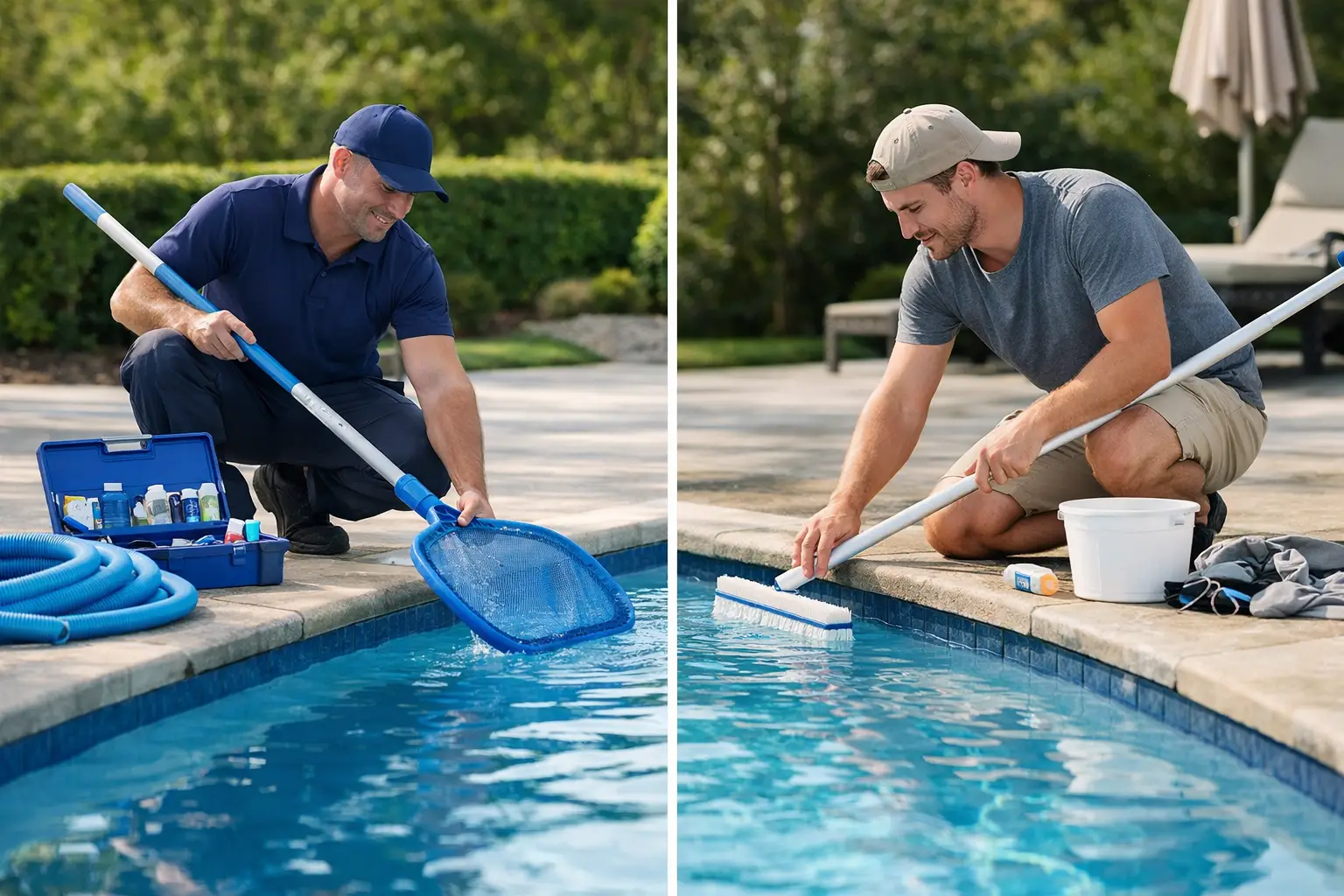
Professional vs. DIY Pool Care: Which Approach Is Right for You?
By Ashton DeBosky | Owner, The Pool Sharks Published by The Pool Sharks
A pool that looks perfectly clear on Friday afternoon may reflect an entire week of small but important decisions: water testing, chemical adjustments, circulation time, debris removal, filter-pressure monitoring, and early equipment evaluation.
The choice between professional and DIY pool care is therefore about much more than who skims the surface. It is a decision about how much time, attention, responsibility, and risk you want connected to one of your home’s most valuable outdoor amenities.
For some Northern Virginia homeowners, caring for a pool is a satisfying, hands-on activity. For others—particularly those balancing demanding careers, family schedules, frequent travel, or multiple residences—pool maintenance can quickly become another obligation that gets postponed until the water no longer looks inviting.
The right approach depends on your experience, availability, pool complexity, and the standard you expect every time you step into your backyard.
What DIY Pool Care Really Requires
DIY pool maintenance can appear relatively straightforward: test the water, add chemicals, empty the baskets, vacuum when necessary, and monitor the equipment.
Those responsibilities are important, but they represent only part of effective pool care.
Pool chemistry changes constantly in response to:
- Heat and sunlight
- Heavy rainfall
- Swimmer activity
- Pollen and organic debris
- Sunscreen and body oils
- Water additions
- Pump runtime
- Filtration performance
Water that tests within an acceptable range one day may require attention soon afterward. Chlorine alone does not determine whether a pool is properly balanced. pH, total alkalinity, stabilizer, calcium hardness, sanitizer levels, and salt concentration all influence water clarity, swimmer comfort, surface protection, and equipment longevity.
DIY care also requires recognizing when a seemingly minor condition points to a larger problem.
Cloudy water may indicate inadequate filtration, poor circulation, developing algae, or improper chemistry. A pump that sounds louder than usual could be drawing air, struggling to maintain prime, or approaching mechanical failure. A recurring need to add water may result from evaporation, but it can also indicate a pool leak.
The earlier these conditions are identified, the more options you generally have for resolving them before they interrupt the season or create a more expensive repair.
DIY maintenance works best for pool owners who:
- Are consistently present at the property
- Enjoy learning pool chemistry and equipment operation
- Can follow a dependable maintenance schedule
- Are comfortable documenting readings and adjustments
- Know when a problem requires professional attention
It is less practical for seasonal residents, frequent travelers, busy families, or anyone who wants the pool consistently ready without accepting another weekly commitment.
What Professional Pool Care Provides
The primary advantage of professional pool care is not simply that someone else removes leaves. Its greater value lies in consistent, knowledgeable oversight.
A trained pool technician follows a regular service schedule, monitors changing conditions, and brings practical experience to details that are easily overlooked between weekend cleanings.
That consistency matters because pool problems rarely appear at convenient times. A small chemical imbalance can become an algae bloom during a stretch of hot weather. A dirty filter can reduce circulation gradually enough to escape immediate notice. A minor equipment issue can place unnecessary strain on the pump, heater, salt system, or other components when left unresolved.
With a premium weekly pool maintenance program, care becomes proactive instead of reactive. The pool can be inspected, cleaned, tested, and adjusted before a developing issue becomes the centerpiece of your weekend.
For homeowners who expect a polished, guest-ready backyard environment, that predictability is often the most important benefit.
Professional service also creates continuity. Instead of searching for assistance only after the water turns green or equipment stops operating, you have a service team familiar with the pool’s normal condition, equipment configuration, operating patterns, and seasonal requirements.
That familiarity can make troubleshooting more efficient and help extend the useful life of major pool components.
Comparing the True Cost of Professional and DIY Pool Care
DIY pool care generally has a lower visible cost, especially when the pool is simple, lightly used, and easily accessible.
However, the true cost includes more than chemicals. A homeowner may also need to purchase:
- A reliable water-testing system
- Brushes, nets, poles, and vacuum equipment
- Sanitizers and balancing chemicals
- Replacement baskets, seals, and small parts
- Filter-cleaning supplies
- A robotic or pressure-side cleaner
- Specialized products for algae or staining
- Storage space for chemicals and equipment
DIY maintenance also requires a consistent investment of personal time.
The cost comparison becomes more complicated when mistakes or delayed maintenance enter the equation. Overcorrecting water chemistry can create uncomfortable conditions, damage finishes, or shorten equipment life. Undertreating the water can allow algae to develop and require a more extensive recovery process.
Waiting too long to address a failing seal, dirty pool filter, suction-side air leak, or circulation problem can also turn a manageable repair into a larger expense.
Professional maintenance is a recurring investment, but it provides a clearer operating plan and regular accountability. Its value is especially significant when the pool belongs to a luxury property expected to remain attractive and functional whether the homeowner is present that week or not.
There is also the value of your time.
Pool maintenance may not be difficult for every homeowner, but it is persistent. During peak season, the pool does not pause because your calendar is full. If you would rather spend Saturday morning with family, preparing for guests, traveling, or simply enjoying the water, professional service may be the more practical investment.
Equipment Care Is Where Experience Matters Most
The equipment pad is the operational center of the pool. Pumps, filters, heaters, automation controls, salt systems, valves, plumbing, and water features must work together for the pool to operate properly.
When one component is not functioning correctly, the symptoms may appear somewhere else.
A homeowner can often perform basic visual inspections and cleaning, but accurate diagnosis requires a deeper level of experience.
For example, low flow could result from:
- A dirty or damaged filter
- A clogged basket
- A blocked suction line
- An incorrect valve position
- A worn or obstructed pump impeller
- A suction-side air leak
- An inadequate water level
- A failing variable-speed pump
Similarly, a pool heater that refuses to operate may have a water-flow problem, ignition failure, sensor issue, electrical fault, gas-supply restriction, or internal component failure. Replacing parts based on guesswork can quickly become expensive and, in some circumstances, unsafe.
Professional technicians can distinguish routine maintenance needs from equipment failures. They can identify patterns, explain priorities, and recommend appropriate repairs instead of relying on repeated temporary adjustments.
This experience becomes particularly valuable for pools equipped with:
- Gas heaters or heat pumps
- Saltwater chlorination systems
- Automated controls
- Variable-speed pumps
- Spas and water features
- In-floor cleaning systems
- Complex plumbing configurations
- Multiple bodies of water
The more sophisticated the pool system becomes, the greater the value of informed technical oversight.
Seasonal Pool Care Requires a Plan
Opening and closing a pool are not simply calendar events. They are important transitions that affect water quality, equipment protection, and the condition of the pool when the next season begins.
A proper pool opening involves more than removing the cover and starting the pump. Depending on the property and equipment, the process may include:
- Inspecting the pool and equipment
- Removing and cleaning the cover
- Restoring the correct water level
- Reconnecting winterized components
- Reassembling filtration equipment
- Starting and inspecting the circulation system
- Cleaning the pool
- Testing and balancing the water
- Confirming that safety features operate properly
A carefully managed opening helps the pool reach a clean, usable condition sooner and provides an opportunity to identify winter-related problems before they affect the swimming season.
Closing deserves equal attention. Improper winterization can expose plumbing, filters, heaters, and other components to freeze damage. A neglected or poorly secured cover can allow debris and contaminated water to create a difficult spring cleanup.
The correct closing procedure depends on the pool type, equipment configuration, property conditions, and Northern Virginia’s winter weather.
For homeowners who travel or maintain multiple residences, professional seasonal management provides something DIY maintenance cannot always guarantee: clear accountability for important details when the homeowner is away.
Can a Hybrid Pool-Care Approach Work?
The choice between professional and DIY pool care does not always have to be absolute.
Some homeowners prefer professional weekly service while handling occasional tasks themselves, such as removing leaves after a storm or checking the pool before a large gathering. Others manage routine cleaning but rely on professionals for openings, closings, equipment repairs, leak detection, and difficult water conditions.
A hybrid approach can work when responsibilities are clearly defined.
Problems occur when the homeowner assumes the service company is monitoring a particular condition while the service company believes the homeowner has accepted that responsibility. Clear communication helps prevent developing issues from being overlooked.
Homeowners who enjoy participating in routine care can still benefit from professional technical oversight, seasonal service, and repair support. This provides some hands-on involvement without leaving the larger investment unprotected.
Professional vs. DIY Pool Care: Which Is Right for You?
DIY pool care may be a good fit if you:
- Enjoy hands-on maintenance
- Want direct control over every adjustment
- Understand pool chemistry and circulation
- Are regularly present at the property
- Can commit to a consistent schedule
- Know when to request professional assistance
Professional pool care may be a better fit if you:
- Value dependable, scheduled service
- Travel frequently or own multiple residences
- Have a complex pool or equipment system
- Want technical issues identified early
- Expect the pool to remain polished and guest-ready
- Prefer to spend your free time enjoying the pool rather than maintaining it
For a luxury home, a pool is more than a body of water. It contributes to the atmosphere of the entire property. It is a setting for family time, quiet mornings, celebrations, and effortless entertaining.
The Pool Sharks provides professional pool maintenance, technical support, and seasonal care throughout Northern Virginia. Our approach is designed for homeowners who expect consistent oversight, clear communication, and a pool that feels ready whenever they are.
Choose the level of care that allows you to enjoy your pool at its best—not merely keep up with whatever it needs next.
Related Pool Care Resources
Meta description: Compare professional versus DIY pool care by cost, time, expertise, and reliability to protect your Northern Virginia pool and free time year-round.