
Saltwater vs. Chlorine Pool Maintenance in Northern Virginia
By Jason DeBosky | 30-Year Pool Industry Veteran Published by The Pool Sharks
A swimming pool can look perfectly clear on Friday and develop a chemistry problem by Monday. A weekend of heavy swimming, intense summer heat, a thunderstorm, or a circulation issue can quickly change water that appeared perfectly balanced only a few days earlier.
That is why saltwater vs. chlorine pool maintenance is not about choosing a maintenance-free pool. It is about choosing how chlorine is delivered, monitored, and managed. Both systems can provide clear, comfortable water, but both require consistent professional attention when appearance, swimmer comfort, and equipment longevity matter.
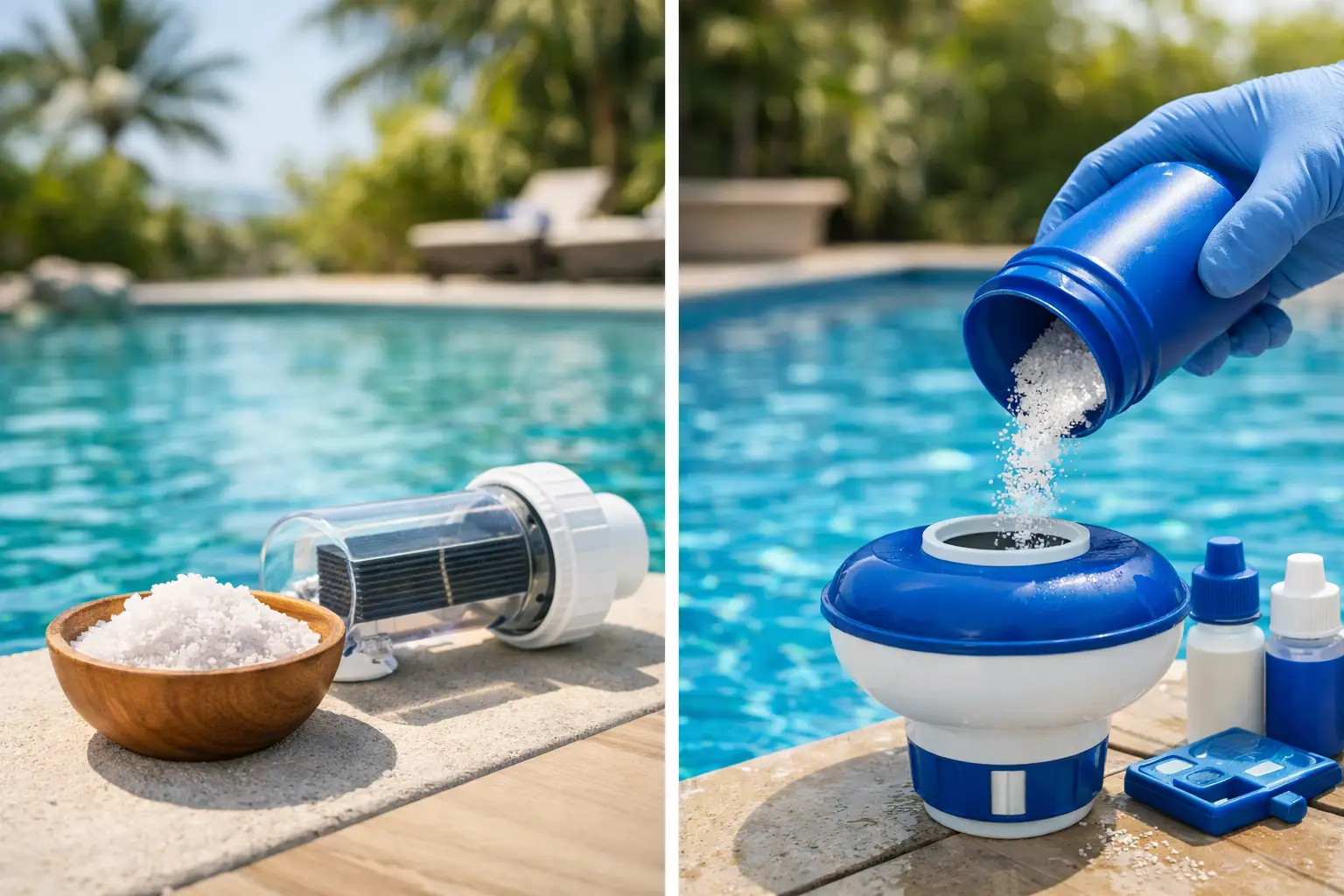
A saltwater pool is not chlorine-free. Its salt cell converts dissolved salt into chlorine while the circulation system operates. A traditional chlorine pool receives chlorine through liquid, tablets, granules, or another approved delivery method. The destination is the same: properly sanitized water. The maintenance path, however, is different.
---
Saltwater vs. Chlorine Pool Maintenance at a Glance
For homeowners, the most noticeable difference is often the swimming experience. Properly maintained saltwater pools may feel softer and have a milder chlorine smell because chlorine is produced gradually. Traditional chlorine pools can provide equally beautiful and comfortable water, but they often require more direct sanitizer adjustments.
Behind the scenes, a saltwater pool includes a chlorine generator, salt cell, control settings, and electrical components. A traditional chlorine pool has fewer specialized sanitation components, although it still depends on accurate water balancing and reliable circulation.
Neither option eliminates weekly pool care. Leaves, pollen, sunscreen, rainfall, swimmers, heat, and filtration problems affect every pool. Skimming, brushing, vacuuming, filter care, water testing, and pool equipment inspections remain important regardless of how chlorine enters the water.
---
What Saltwater Pool Maintenance Requires
A saltwater system can create a convenient ownership experience when it is properly sized, calibrated, and maintained. The generator produces chlorine gradually, reducing the need for frequent manual additions. However, the system automates only one part of pool sanitation.
The salt level must remain within the range recommended by the equipment manufacturer. Too little salt may prevent the generator from producing enough chlorine. Too much salt can trigger system warnings and may increase concerns involving corrosion or surrounding materials.
Salt levels can change because of rainfall, overflowing, splash-out, backwashing, leaks, and water replacement. The reading displayed by the generator should occasionally be compared with an independent water test because a scaled or aging cell may report an inaccurate result.
Generator output must also be adjusted as conditions change. A setting that produces enough chlorine during a mild spring week may not keep up with a heavily used pool during July or August.
Salt-Cell Performance and Scaling
The salt cell requires periodic inspection. Calcium scale can accumulate on its internal plates, especially when calcium hardness and pH remain elevated. This buildup reduces chlorine production and can shorten the life of an expensive component.
The cell should be cleaned only when needed and according to the manufacturer’s directions. Unnecessary acid cleaning can damage the coating on the cell plates. When scale repeatedly returns, the complete water balance should be corrected instead of continually cleaning the symptom.
Professional salt-system service can help identify low chlorine production, inaccurate salt readings, flow warnings, scaling, and aging equipment.
Water Balance in a Saltwater Pool
Saltwater pools commonly experience an upward movement in pH. If elevated pH is not corrected, the pool may develop cloudy water, scale, reduced sanitizer performance, rough surfaces, or uncomfortable swimming conditions.
Free chlorine, pH, total alkalinity, calcium hardness, cyanuric acid, and salt must be evaluated together. Adjusting one reading without considering the others can create additional problems.
During extreme heat, storms, heavy swimming, or early algae growth, supplemental chlorine or oxidation may be necessary. Increasing the salt generator’s output is not always the fastest way to restore problem water.
---
What Traditional Chlorine Pool Maintenance Requires
A traditional chlorine pool offers direct control over sanitizer delivery. Chlorine can be added according to current water conditions, making this system useful for pools with changing swimmer activity, significant debris exposure, or seasonal occupancy.
There is no salt cell to inspect or replace, but the pool still requires a disciplined service routine. Sunlight, heat, rain, swimmers, pollen, and organic debris consume chlorine. If the free-chlorine level falls too low, algae and bacteria can begin developing quickly.
Adding more chlorine is not always the complete solution. Chlorine effectiveness is influenced by pH, cyanuric acid, circulation, filtration, and the amount of contamination in the water.
Tablets, liquid chlorine, and granular products also affect the water differently. Some products gradually increase cyanuric acid, while others can influence calcium hardness or pH. Professional service considers the entire water profile rather than adding sanitizer in isolation.
Shock Treatment and Clear Water
Traditional chlorine pools may require periodic oxidation following heavy swimming, severe weather, cloudy water, or evidence of combined chlorine. Saltwater pools may require the same treatment.
The decision should be based on testing and current conditions instead of an automatic calendar. A strong chemical smell does not necessarily indicate excessive usable chlorine. It may signal combined chlorine, inadequate oxidation, poor circulation, or contamination in the water.
Clear water is not always balanced water. A pool may appear pristine while an imbalance is contributing to scale, staining, corrosion, surface deterioration, or equipment strain. Routine testing identifies those changes before they become visible or expensive.
---
Equipment Differences Between Saltwater and Chlorine Pools
Saltwater is comfortable for swimmers, but poor water balance, inadequate bonding, and incompatible materials may contribute to corrosion. Professional maintenance should include observations of handrails, light niches, heaters, pumps, seals, automation, metal fixtures, and nearby outdoor equipment.
Traditional chlorine pools do not have a salt cell or generator, but their pumps, filters, heaters, plumbing, feeders, and automation still require regular attention.
In both systems, circulation and filtration are essential. Even perfectly balanced chemicals cannot compensate for a failing pump, restricted filter, closed valve, or circulation problem. Proactive pool equipment repair helps prevent a minor concern from interrupting the swimming season.
---
Saltwater vs. Chlorine Pool Maintenance Costs
Saltwater systems generally cost more to install because they require a chlorine generator, salt cell, compatible controls, and electrical work. They may reduce the amount of chlorine that must be purchased and manually added, but ownership costs should also include electricity, salt additions, inspections, cell cleaning, repairs, and eventual salt-cell replacement.
Traditional chlorine pools usually have a lower initial equipment cost. Their recurring chemical expenses may be higher depending on pool size, temperature, sun exposure, swimmer activity, and the products being used.
The better value is not automatically the system with the lowest upfront price. A homeowner who wants less frequent manual chlorine handling may appreciate a saltwater generator. A homeowner whose traditional chlorine pool is already operating efficiently may have little reason to convert.
The right decision depends on the pool’s construction, existing equipment, surrounding materials, usage pattern, and the homeowner’s preferred ownership experience.
---
Northern Virginia Weather Affects Both Systems
Pools in Northern Virginia experience changing conditions throughout the swimming season. Spring pollen increases organic demand before many pools are used regularly. Summer heat and direct sunlight increase chlorine consumption. Thunderstorms can introduce contaminants, dilute chemistry, and cause overflowing. Falling leaves create another maintenance challenge later in the year.
These conditions affect saltwater and traditional chlorine pools differently, but neither system can be adjusted once and ignored.
Saltwater-generator output may need to increase as temperatures and swimming activity rise. A traditional chlorine pool may require more frequent sanitizer additions during the same period. Consistent weekly pool maintenance allows those adjustments to be made before the water loses clarity or develops algae.
---
Seasonal Care Matters for Both Pool Types
Pool openings and closings deserve the same attention whether a pool uses a salt generator or traditional chlorine.
During a professional pool opening, circulation must be restored, equipment inspected, filtration evaluated, and the water tested and balanced. A salt generator should not be expected to correct neglected opening water by itself. The pool should be cleaned and sanitized before the generator assumes normal chlorine production.
During a professional pool closing, the water, plumbing, pump, filter, heater, automation, and sanitation equipment must be prepared for winter. Salt cells may require specific winterization procedures based on the system and manufacturer.
For seasonal residents, organized service helps ensure the pool is ready when the household arrives instead of becoming another project waiting at the property.
---
Which Pool Is Easier to Maintain?
Saltwater pools may be more convenient for homeowners who want less frequent manual chlorine handling, but they are not maintenance-free. They require salt monitoring, pH control, output adjustments, cell inspections, and specialized equipment care.
Traditional chlorine pools are mechanically simpler, but they generally require more active sanitizer management.
In either case, reliable maintenance depends on consistent testing, precise chemical adjustments, dependable circulation, clean filtration, and proactive equipment inspections.
For a luxury residence, the question is not simply which system requires fewer tasks. The real question is which system can be managed to keep the water inviting, the equipment protected, and the backyard ready without becoming another demand on the homeowner’s time.
---
Frequently Asked Questions
Is a saltwater pool chlorine-free?
No. A saltwater pool uses a generator to convert dissolved salt into chlorine. Chlorine remains the primary sanitizer.
Do saltwater pools still require weekly service?
Yes. They still need cleaning, water testing, chemical balancing, filter care, salt monitoring, and equipment inspections.
Can saltwater pools develop algae?
Yes. Algae can develop when chlorine production is inadequate, circulation is poor, chemistry is unbalanced, or environmental demand exceeds the system’s output.
Can an existing chlorine pool be converted to saltwater?
Many pools can be converted, but the existing equipment, electrical system, bonding, pool surface, and surrounding materials should be evaluated first.
Which system is better for Northern Virginia?
Either system can perform well when it is properly maintained. The best choice depends on the pool, equipment, property conditions, usage, and the homeowner’s preferences.
---
Professional Pool Maintenance in Northern Virginia
Saltwater and traditional chlorine pools can both provide beautiful, comfortable water. The difference is how chlorine is delivered and which maintenance responsibilities accompany the system.
The Pool Sharks provides professional maintenance, salt-system support, equipment service, openings, and closings for luxury pools throughout Northern Virginia.
Whether your pool uses a salt cell or conventional chlorine, consistent professional care helps catch small water and equipment changes before they become expensive problems.
Contact The Pool Sharks to discuss professional pool care for your property.
The Pool Sharks — Where Luxury Meets Peace of Mind.