
By Ashton DeBosky | The Pool Sharks of Northern Virginia
Published by The Pool Sharks LLC.
A beautiful pool should feel like an effortless extension of your home, not a source of avoidable utility costs. So, can automation reduce pool energy use? In many homes, yes. When the right equipment is paired with thoughtful programming, automation can reduce waste while keeping the water clear, comfortable, and ready whenever you are.
The key is not adding technology for its own sake. Effective pool automation is a tailored system that tells pumps, heaters, lights, and water features when to operate, how long to run, and when to scale back. For homeowners who value both performance and convenience, that level of control can make a meaningful difference.
Can Automation Reduce Pool Energy Costs?
Pool equipment often uses energy when no one is enjoying the pool. A single-speed pump running at full output for long daily cycles, a heater operating beyond the hours you need it, or decorative features left on overnight can all create unnecessary expense.
Automation replaces those broad, manual settings with precise schedules and operating rules. It can start circulation during lower-demand hours, reduce pump speed once filtration needs are met, and maintain a preferred water temperature only when the pool is likely to be used. Instead of asking you to remember every adjustment, the system manages those details in the background.
Savings depend on your equipment, climate, utility rates, pool size, and how frequently the pool is used. A heated pool with a traditional single-speed pump usually presents more opportunity than a smaller pool that already has efficient equipment. Still, nearly every pool benefits from having its systems operate with intention rather than habit.
Where Pool Automation Makes the Greatest Difference
Variable-speed pump control
For most residential pools, the circulation pump is the largest ongoing electrical draw. Variable-speed pumps use substantially less energy at lower speeds than they do at maximum output. The challenge is finding the correct balance between efficient operation and proper filtration.
An automated controller can run the pump at a lower speed for normal daily circulation, then increase the speed for vacuuming, water features, heating, or periods of heavy pool use. This approach is more refined than simply setting a timer and hoping the schedule fits every need. Your pool receives the circulation it requires without operating at peak power all day.
Smarter heating schedules
Heating is often the most significant pool energy expense, especially in regions with cool evenings or extended shoulder seasons. Automation can establish a set temperature, limit heating to selected days or hours, and allow homeowners to prepare the pool before a planned gathering rather than maintaining high heat continuously.
For example, a family that primarily uses the pool on weekends may choose a modest holding temperature during the week and schedule the heater to reach their preferred temperature before Friday evening. That does not mean the pool will heat instantly, and it does not eliminate heat loss. It does, however, help prevent the heater from working harder than your lifestyle requires.
A quality pool cover remains one of the best partners for an automated heating strategy. Automation controls when heat is produced; a cover helps retain that heat when the pool is not in use.
Water features and lighting
Sheer descents, bubblers, waterfalls, and spa spillways add drama and movement to an outdoor setting, but they may also require extra pump power. Automated schedules make it easy to enjoy those features during entertaining hours and turn them off afterward without a second thought.
The same applies to lighting. A programmed evening schedule creates a polished backyard atmosphere without leaving lights on until morning. These savings may be smaller than pump or heater savings, but they contribute to a more disciplined, well-managed pool environment.
Remote oversight and alerts
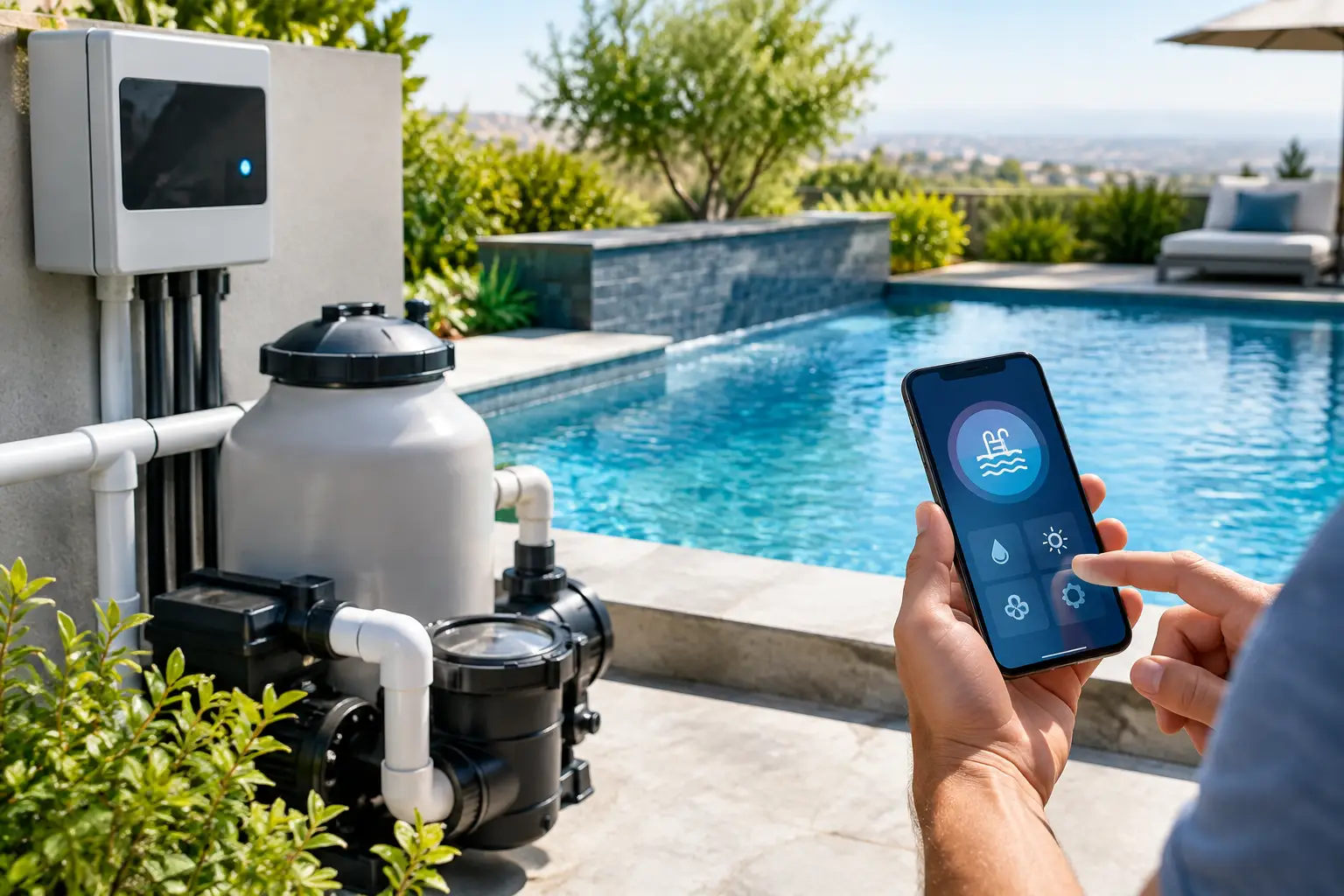
Modern automation gives homeowners visibility from a phone or wall-mounted controller. You may be able to adjust a temperature, check whether equipment is running, or turn on the spa before arriving home. That convenience has an energy benefit as well: equipment is less likely to run unnecessarily because a setting was forgotten.
Some systems can also signal unusual operating conditions, such as a pump that fails to prime or a temperature that is not responding as expected. An alert does not replace professional diagnosis, but early attention can help limit equipment strain and avoid a minor problem becoming a costly repair.
Efficient Settings Still Need Expert Judgment
Automation is only as effective as its programming. Setting a pump speed too low may compromise circulation. Reducing filtration time too aggressively can contribute to cloudy water, algae pressure, and greater chemical demand. Holding a pool too cool may save energy, but it may also leave the water less inviting when you want to use it.
That is why a premium pool care plan should treat automation as part of a larger operating strategy. The right schedule accounts for your sanitizer system, pool volume, seasonal weather, bather load, water features, and equipment condition. A saltwater pool, for instance, needs enough circulation time for its chlorine generator to meet demand. A pool with an attached spa may need different programming for spillover and heat management.
The best settings also change throughout the year. Longer, warmer days may call for more circulation. Cooler weather may allow reduced run times, while a holiday weekend or house full of guests can justify temporarily increasing output. Automation makes these adjustments easier, but it should not be treated as a set-it-and-forget-it solution.
The Trade-Offs to Consider Before Upgrading
A complete automation installation can be a meaningful investment, particularly if older equipment needs to be replaced or electrical work is required. The payoff is usually strongest when automation is combined with a variable-speed pump, compatible heater, and properly sized equipment pad. Installing a sophisticated controller around failing or inefficient equipment will not deliver its full value.
Compatibility matters, too. Some homeowners can add automated controls to existing systems, while others will see better long-term results by planning an equipment upgrade in phases. A professional assessment can identify whether your pump, heater, valves, lighting, and sanitation equipment can communicate with one controller.
There is also a practical distinction between convenience and conservation. Remote access is highly useful, but energy savings come from the schedules, set points, and pump-speed programming behind it. A well-designed system should feel simple to use because the complexity has already been addressed during setup.
A Concierge Approach to Pool Energy Management
For busy homeowners, the value of automation is not limited to a lower utility bill. It reduces the number of small decisions required to keep a pool operating beautifully. Your pool can be prepared for a quiet morning swim, an evening with guests, or a weekend at home without requiring constant equipment adjustments.
At The Pool Sharks, we view automated equipment as one element of responsible pool stewardship. During regular service, settings can be reviewed alongside water chemistry, equipment performance, and seasonal demands. If conditions change, the operating plan can change with them, protecting both your comfort and your investment.
A pool should work around your life, not ask you to organize your life around its equipment. The most effective automation plan begins with how you use your backyard, then gives every pump cycle, heating hour, and feature schedule a clear purpose.
Pool Automation Help in Northern Virginia
The Pool Sharks serves concrete pool owners in Loudoun, Fairfax, Fauquier, and Prince William counties. Explore our pool automation services or call (703) 452-2788 to discuss your equipment and schedules.
Where Luxury Meets Peace of Mind.