
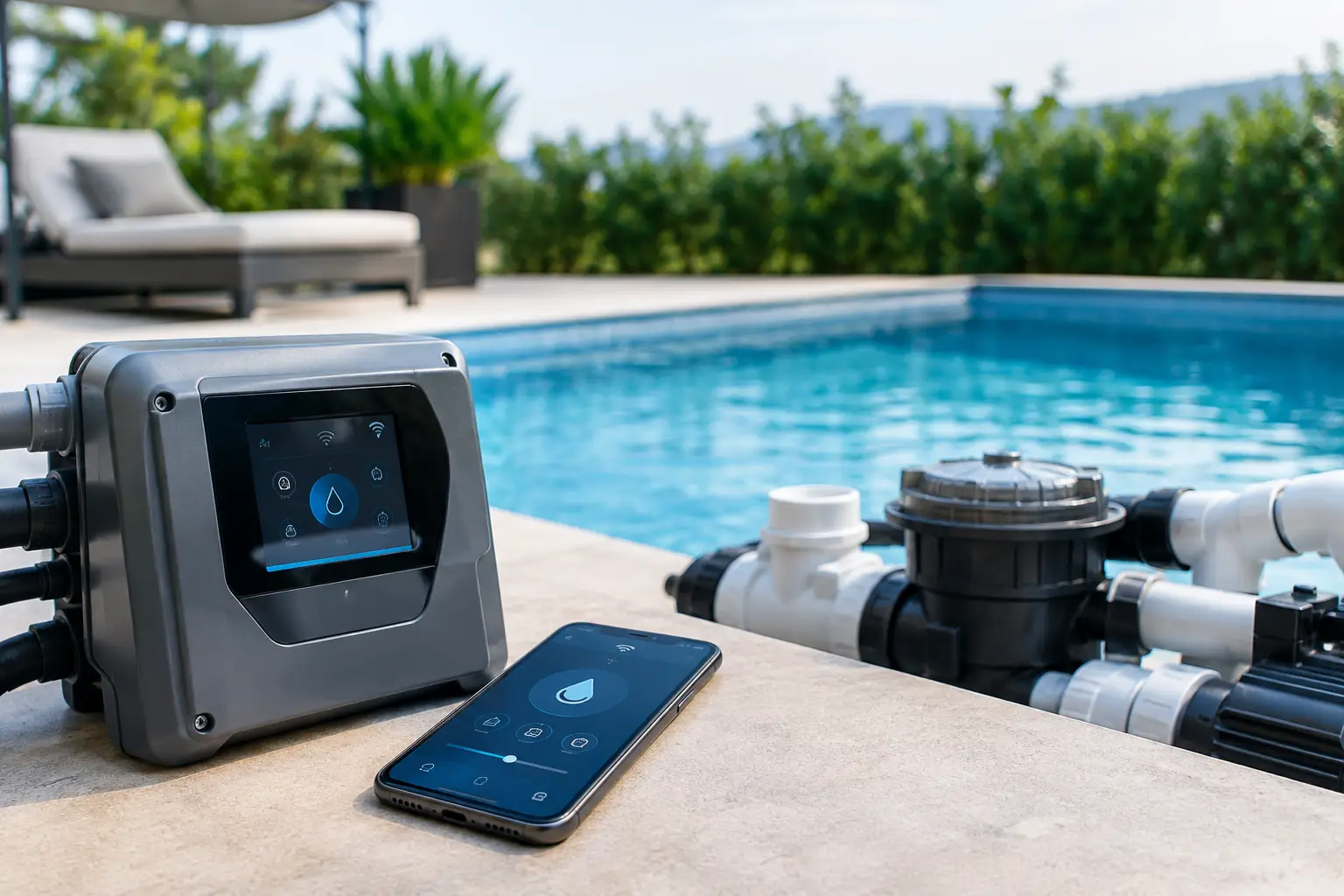
A well-designed pool should feel ready when you are - clear, comfortable, properly lit, and never waiting on a manual adjustment. This pool automation setup guide outlines what a thoughtful system can do, where professional planning matters, and how automation can make ownership noticeably easier without sacrificing the personal attention a luxury pool requires.
For busy homeowners, automation is not about adding more technology for its own sake. It is about replacing daily guesswork with reliable routines, protecting expensive equipment, and ensuring the pool remains an asset to enjoy rather than another property responsibility to manage.
What Pool Automation Actually Controls
Pool automation connects key equipment to a central control system. Depending on the design of your pool, that system can manage the pump, heater, filtration schedule, lighting, water features, spa functions, and certain sanitation equipment from a dedicated panel, a wall-mounted controller, or a mobile app.
The most useful benefit is coordination. Rather than operating each component independently, the system can run them in the correct order. A spa setting, for example, can activate the appropriate valves, increase circulation, turn on the heater, and adjust lighting with one command. A scheduled filtration cycle can operate around your household's routine and local utility rates.
Automation does not eliminate the need for professional pool care. It handles repeatable equipment tasks exceptionally well, while a trained technician still needs to inspect water quality, clean surfaces, spot developing leaks, assess equipment wear, and make judgment calls that software cannot.
Start With Your Pool's Real Priorities
The best automation plan begins with how you use the property, not with a list of features. A family that swims every afternoon may prioritize dependable heating, lighting scenes, and easy pump scheduling. A seasonal homeowner may place greater value on remote visibility, freeze protection, and alerts when operating conditions change.
Consider the equipment already in place. Variable-speed pumps, compatible heaters, salt systems, actuated valves, LED lighting, and water features may integrate well with a modern controller. Older equipment can often be incorporated, but compatibility should be verified before selecting a platform. In some cases, replacing an aging component during the installation is more sensible than building controls around equipment near the end of its service life.
It also helps to decide what you want to control remotely and what should remain protected at the equipment pad. Remote access is valuable for checking status, changing a schedule, warming a spa before arriving home, or responding to an alert. Yet critical electrical work, programming changes, and seasonal settings should be handled with professional oversight. Convenience should never come at the expense of safe operation.
Pool Automation Setup Guide: The Essential Planning Steps
A professional pool automation setup typically starts with an on-site equipment review. The technician identifies the pump type, heater model, plumbing configuration, valve locations, electrical capacity, existing controls, and any special features such as an attached spa, waterfall, slide, or deck jets. This step prevents the common frustration of installing a controller that cannot deliver the functions the homeowner expected.
Next comes the control strategy. For many pools, the foundation is a properly programmed filtration schedule paired with variable-speed pump settings. Running a pump at the right speed for the right duration can support water circulation while using less energy than a single-speed system operating unnecessarily at full output. The ideal schedule depends on pool volume, bather load, sanitation method, water temperature, and climate. There is no universal setting that serves every pool well.
After the circulation plan is established, features can be grouped into practical scenes. A morning setting may run filtration quietly. An entertaining setting may activate landscape-friendly lighting and water features. A spa setting can prepare the water at a comfortable temperature before guests arrive. The goal is not to create an elaborate menu of buttons. It is to make the controls intuitive enough that the pool responds naturally to the way your household lives.
Finally, the system should be tested under real operating conditions. Pumps need to prime correctly, heaters need proper flow, valves need to move to the intended position, and every feature should respond as programmed. A polished installation includes a clear walkthrough, so the homeowner understands everyday controls without needing to become the pool's full-time operator.
The Features That Deliver the Most Value
For most luxury residential pools, automation pays off most clearly in a few areas. Scheduled filtration maintains consistent circulation without relying on memory. Remote heater and spa controls make the pool environment ready on your timetable. Automated lighting allows a poolscape to transition from daytime relaxation to evening entertaining without a trip to the equipment pad.
Freeze protection is especially valuable in regions with occasional cold snaps. When correctly configured, the system can run circulation equipment when temperatures approach a dangerous threshold, helping reduce the risk of freeze-related plumbing damage. It is a safeguard, not a substitute for a proper seasonal closing in climates where pools are winterized.
Alerts and status monitoring can also improve peace of mind. Depending on the system and installed equipment, homeowners may receive notifications tied to communication loss, temperature changes, or other operating conditions. These notices are helpful because they prompt attention early. They should not be treated as a complete diagnostic service, since many water-quality and mechanical concerns require an in-person inspection.
Why Installation Quality Matters More Than the App
A refined mobile app is appealing, but the reliability of the installation matters far more. Pool automation involves electrical connections, relay configuration, low-voltage wiring, plumbing actuators, equipment compatibility, and safety considerations. Improper installation can lead to unreliable operation, heater errors, tripped breakers, damaged components, or controls that work only part of the time.
The equipment pad also deserves consideration. A clean, organized installation protects wiring and makes future service more efficient. Labels should be clear, connections should be properly secured, and manual overrides should remain accessible. A professional technician should also preserve the ability to service individual components if the controller is offline or needs attention.
Wi-Fi deserves a realistic assessment as well. The pool equipment area may be too far from the home's router for dependable communication. A weak signal can make a perfectly installed system appear unreliable. Improving network coverage near the equipment pad is often a small but worthwhile part of the project.
Automation and Weekly Service Work Best Together
Automation creates consistency. Concierge-level pool service provides stewardship. Together, they offer a more complete ownership experience.
Your service professional can review schedules as seasons shift, confirm that the pump and heater are operating as intended, inspect actuators and controls, and adjust settings after repairs or upgrades. They can also identify when an automated schedule no longer matches the pool's needs, such as after a change in water temperature, landscaping, household use, or sanitation demand.
This relationship is particularly useful for seasonal residents. Remote controls allow you to check on the pool from anywhere, while a trusted service team provides the on-site judgment that protects the property when a notification calls for more than a screen-level adjustment. The Pool Sharks approaches automation as part of complete pool stewardship, not as a replacement for attentive maintenance.
Common Mistakes to Avoid
The first mistake is automating a problem rather than correcting it. A pump that loses prime, a heater with persistent faults, or a valve that sticks should be repaired before it is integrated into a new control system. Automation will repeat a command reliably, but it cannot make failing equipment dependable.
The second is overcomplicating the system. More features are not always better. A smaller number of well-designed schedules and scenes is easier to use, easier to service, and less likely to cause confusion when family members or guests need basic control.
The third is treating water chemistry as fully automatic. Some systems can monitor or assist with sanitization and chemical feeding, but water balance still changes with weather, use, debris, and source water. Regular testing and professional adjustment remain central to protecting finishes, equipment, and swimmer comfort.
A pool automation system should quietly support the life you want to enjoy at home: an inviting spa after a long day, a pool ready for a weekend gathering, and equipment managed with care even when your schedule is full. With the right plan and qualified installation, control becomes simple while the standard of care remains exceptionally high.