
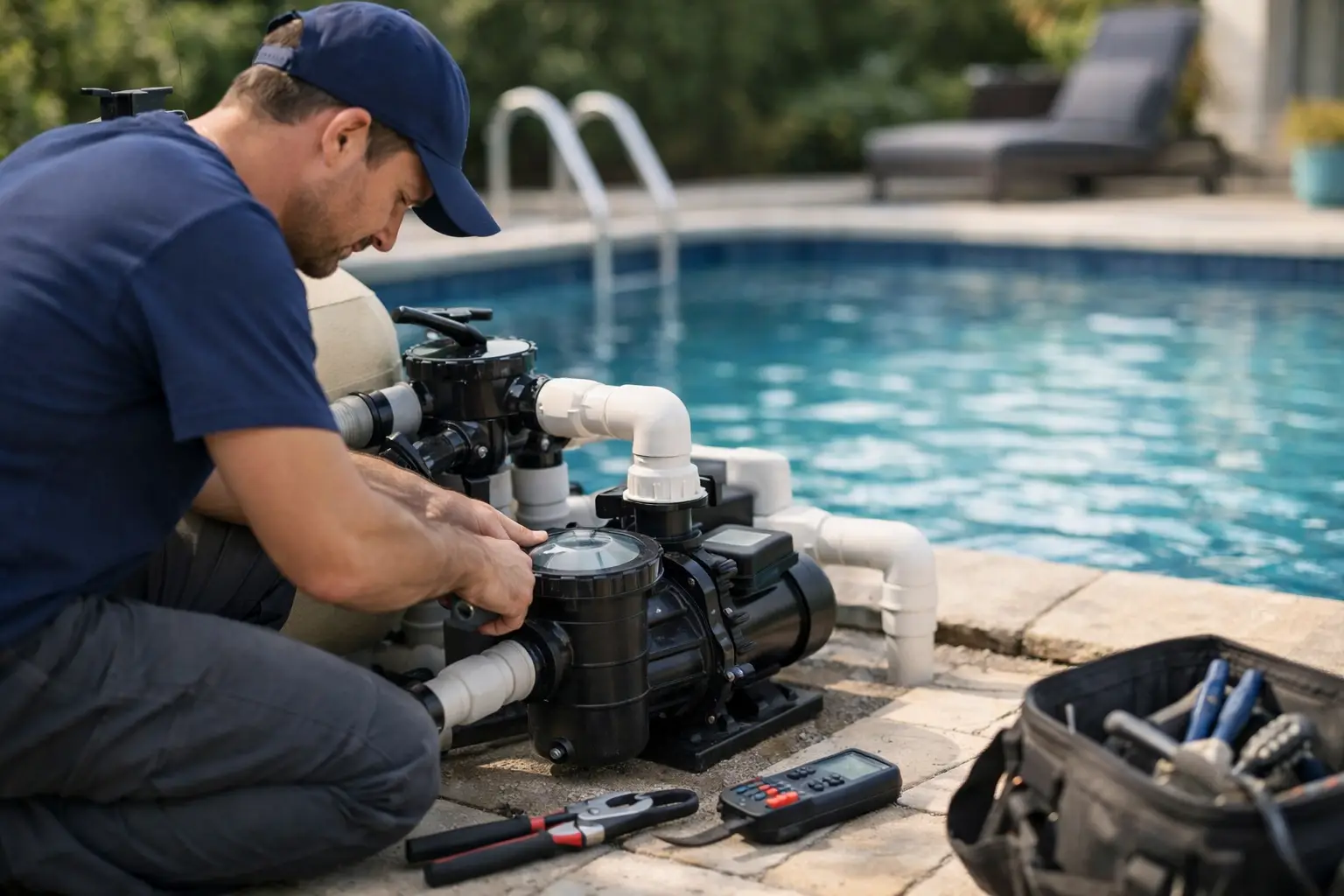
Pool Pump Repair Service in Northern Virginia | Expert Pool Pump Repair, Diagnosis & Replacement
By Jason DeBosky | 30-Year Pool Industry Veteran Published by The Pool Sharks
A swimming pool can look perfectly calm while one of its most important components is working harder than it should. Your pool pump is the heart of your swimming pool's circulation system, moving thousands of gallons of water through the filter, heater, salt system, chlorinator, and return lines every single day. Without proper circulation, even perfectly balanced water chemistry cannot keep your pool clean, healthy, and safe.
When a pool pump begins to fail, the warning signs are often subtle. You may notice a new noise, weaker return jets, air bubbles under the pump lid, or water that simply isn't as clear as it once was. Ignoring these symptoms can lead to expensive equipment damage, increased energy costs, poor water quality, and even complete pump failure.
At The Pool Sharks, we provide professional pool pump repair services throughout Loudoun County, Fairfax County, Fauquier County, and Prince William County. Our experienced technicians diagnose problems correctly the first time, explain your options honestly, and help you determine whether repair or replacement is the smartest long-term investment.
Whether you own a luxury gunite pool in Ashburn, Leesburg, Purcellville, Aldie, Brambleton, South Riding, Great Falls, McLean, Vienna, Chantilly, Centreville, Gainesville, Haymarket, Warrenton, Marshall, Middleburg, or anywhere throughout Northern Virginia, our goal is to keep your circulation system operating efficiently so you can spend more time enjoying your pool and less time worrying about equipment.
Why Your Pool Pump Is the Heart of Your Swimming Pool
Every piece of equipment on your pool depends on proper water circulation.
Your pool pump performs several critical functions every day:
- Draws water from the skimmers and main drain
- Pushes water through your pool filter
- Circulates sanitizer evenly throughout the pool
- Supplies proper water flow to your heater
- Powers salt chlorine generators
- Operates waterfalls and water features
- Prevents stagnant water and algae growth
- Helps maintain balanced pool chemistry
Without dependable circulation, your filter cannot properly remove debris, chemicals cannot sanitize the water effectively, and expensive equipment can begin operating outside its designed flow range.
For homeowners investing in routine maintenance, we recommend learning more about our Weekly Pool Maintenance, Pool Filter Cleaning, and Pool Equipment Repairs services.
Common Signs Your Pool Pump Needs Repair
Pool pumps rarely fail without warning. Most problems begin gradually before becoming expensive breakdowns.
Unusual Noises Coming from the Pump
A properly operating pool pump should produce a smooth, consistent hum.
If you hear grinding, screeching, whining, buzzing, rattling, or excessive vibration, your pump likely needs professional attention.
Common causes include worn bearings, failing capacitors, damaged impellers, loose mounting hardware, or motor problems.
Weak Water Circulation
If your return jets feel weaker than normal or debris is not moving toward the skimmers, your circulation system may have a problem.
Weak circulation may be caused by:
- Dirty filter
- Plugged impeller
- Air leak
- Worn motor
- Plumbing restriction
- Valve issue
Poor circulation makes it much harder to maintain crystal-clear water.
Air Bubbles Under the Pump Lid
Air collecting beneath the clear pump lid or bubbles blowing from your return jets usually indicate a suction-side air leak.
Possible causes include:
- Bad lid O-ring
- Loose plumbing unions
- Low pool water level
- Cracked suction pipe
- Worn shaft seal
Air leaks reduce pump efficiency and can eventually damage internal components.
Water Leaking Around the Pump
Never ignore water around your equipment pad.
Leaks commonly originate from:
- Shaft seals
- Pump housing
- Drain plugs
- Plumbing fittings
- Pump lid
- O-rings
Water reaching the motor can quickly destroy bearings and electrical components.
Burning Smells or Tripped Breakers
If your pump develops a burning odor, becomes extremely hot, or repeatedly trips the breaker, shut it off immediately.
These symptoms may indicate serious electrical or mechanical failure requiring professional diagnosis.
Why Ignoring Pool Pump Problems Can Become Expensive
Many homeowners continue operating noisy or leaking pumps because "it's still working."
Unfortunately, that small issue often creates much larger repairs.
A leaking shaft seal can ruin the motor.
A failing bearing can destroy the motor windings.
Poor circulation can damage heaters, salt systems, and reduce water quality.
Early repairs are almost always less expensive than waiting for complete failure.
What Causes Pool Pump Failure?
Pool pumps experience thousands of hours of operation every season.
Common causes of failure include:
- Normal wear and tear
- Poor water chemistry
- Dirty filters
- Running dry
- Air leaks
- Calcium buildup
- Electrical problems
- Frozen plumbing
- Lack of maintenance
Routine inspections can often identify these problems before permanent damage occurs.
What Happens During a Professional Pool Pump Inspection?
At The Pool Sharks, we believe repairs should begin with proper diagnosis.
Our inspection includes:
- Motor condition
- Bearings
- Capacitor
- Shaft seal
- Impeller
- Pump basket
- Pump housing
- Filter pressure
- Water flow
- Electrical connections
- Plumbing
- Valves
- Heater flow
- Salt system operation
- Automation settings
Sometimes the pump isn't actually the problem. A clogged filter, underground suction leak, or failing valve can produce similar symptoms.
Pool Pump Repair vs. Pool Pump Replacement
Not every pump needs to be replaced.
Repairs are often appropriate when:
- The housing is in good condition.
- The motor remains healthy.
- Parts are available.
- The problem is isolated.
Common repairs include replacing bearings, shaft seals, capacitors, impellers, O-rings, switches, lids, and plumbing fittings.
When Replacing Your Pool Pump Makes More Sense
Replacement may be the better investment when:
- The housing is cracked.
- The motor has failed.
- Multiple repairs are needed.
- Parts are discontinued.
- Energy costs are excessive.
Modern variable-speed pumps offer:
- Lower electric bills
- Quieter operation
- Better filtration
- Improved circulation
- Longer equipment life
Preventative Maintenance Helps Avoid Costly Repairs
Routine maintenance protects your entire circulation system.
During our Weekly Pool Maintenance Service, technicians monitor:
- Pump performance
- Flow rate
- Equipment noises
- Filter pressure
- Water chemistry
- Leaks
- Water level
- Valve operation
Small changes are often identified before homeowners ever notice a problem.
Pool Chemistry Can Affect Pump Performance
Improper water chemistry doesn't only damage plaster.
It can also shorten the life of your equipment.
Poor chemistry contributes to:
- Calcium scale
- Corrosion
- Seal deterioration
- Salt cell restrictions
- Heater scaling
Maintaining balanced water chemistry helps protect your entire investment.
Visit our Pool Water Chemistry Diagnosis Center to learn more.
Why Homeowners Throughout Northern Virginia Choose The Pool Sharks
The Pool Sharks provides concierge-level pool care throughout:
- Loudoun County
- Fairfax County
- Fauquier County
- Prince William County
Including:
Ashburn, Leesburg, Purcellville, Aldie, Brambleton, South Riding, Sterling, Great Falls, McLean, Vienna, Reston, Herndon, Chantilly, Centreville, Fairfax, Burke, Springfield, Clifton, Gainesville, Haymarket, Warrenton, Marshall, Middleburg, Bealeton, Catlett, Remington, and surrounding Northern Virginia communities.
Frequently Asked Questions About Pool Pump Repair
Can a Pool Pump Usually Be Repaired?
Yes. Many pump failures involve replaceable parts such as bearings, shaft seals, capacitors, impellers, or O-rings.
How Long Should a Pool Pump Last?
Most quality pool pumps last between 8 and 15 years depending on maintenance, operating hours, and water chemistry.
Why Is My Pool Pump So Loud?
Grinding or screeching usually indicates worn bearings. Humming often points toward electrical problems or a failing capacitor.
Why Does My Pump Keep Losing Prime?
Common causes include suction-side air leaks, low water levels, damaged lid O-rings, clogged skimmers, or plumbing leaks.
Can I Continue Running a Noisy Pump?
No. Continued operation can cause additional damage and increase repair costs.
Schedule Your Pool Pump Repair Service with The Pool Sharks
If your pool pump has become noisy, is leaking, losing prime, producing weak circulation, or simply isn't operating the way it should, don't wait until complete failure.
The Pool Sharks provides professional pool pump repair, equipment diagnosis, preventative maintenance, and honest repair recommendations throughout Northern Virginia.
Related Internal Links
- Weekly Pool Maintenance
- Pool Equipment Repairs
- Pool Filter Cleaning
- Pool Heater Repair
- Salt System Service
- Pool Leak Detection
- Pool Water Chemistry Diagnosis
- Pool Opening Service
- Pool Closing Service
- Pool Equipment Upgrades
Continue Exploring Pool Care
Continue with pool equipment repair and diagnostics, Best Variable Speed Pumps for Luxury Pools, Pool Pump Reviews for Luxury Homeowners, Northern Virginia service areas, and request private client access. These resources help Northern Virginia homeowners connect practical guidance with the appropriate professional service.