
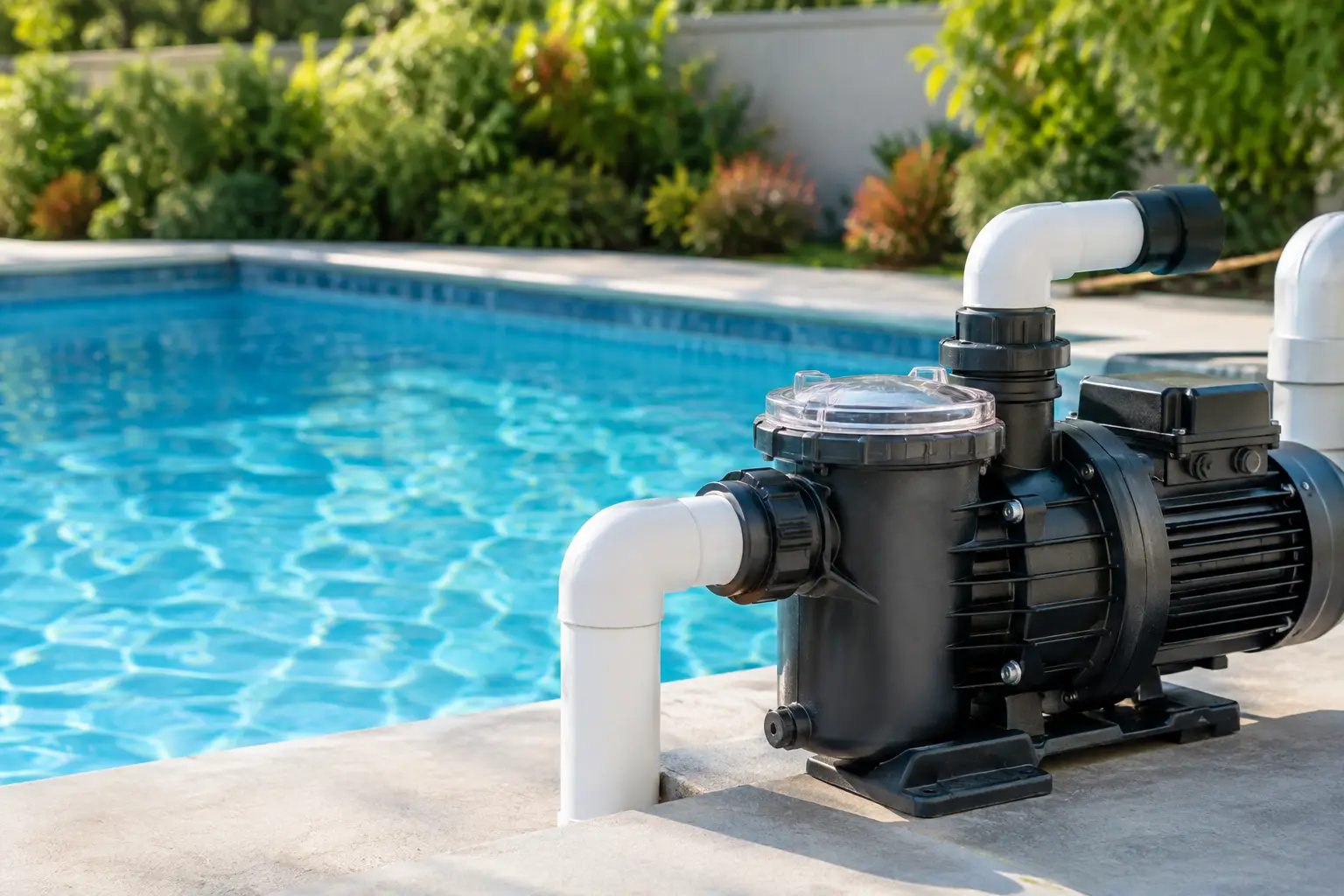
Pool Circulation Recovery in Northern Virginia: Restoring Flow, Clarity, and Equipment Performance
By Jason DeBosky | Pool Industry Professional with 30+ Years of Experience | The Pool Sharks LLC
A pool can look fine from the patio while its circulation system is struggling. Weak return jets, a pump that repeatedly loses prime, or debris collecting in quiet corners can be early signs that water is no longer moving as it should.
For homeowners in Leesburg, Ashburn, Great Falls, McLean, and throughout Northern Virginia, pool circulation recovery begins with finding the cause—not simply adding chemicals or extending the pump schedule.
At The Pool Sharks LLC, we approach circulation concerns through the experience of more than three decades in swimming pool construction, remodeling, and service. We consider the pool, plumbing, filtration, and equipment together because reliable water quality depends on how those parts work as a system.
What Is Pool Circulation Recovery?
Pool circulation recovery is the process of identifying what interrupted water movement, correcting the problem, and verifying that the system operates properly again.
Circulation carries suspended debris toward the filter and helps distribute sanitizer, heat, and treatment products. When flow becomes restricted or unreliable, maintaining clear, balanced water becomes more difficult.
Recovery may involve straightforward maintenance, such as clearing baskets or servicing a filter. Other situations require investigation of air leaks, pump components, valve settings, or plumbing restrictions.
The objective is dependable operation supported by appropriate water treatment and filtration.
Signs Your Pool May Have a Circulation Problem
Weak Return Jets
Return flow that feels weaker than usual can indicate a change in pump speed, a restriction, or an equipment issue.
Compare performance under the same operating conditions. A variable-speed pump running at a lower programmed speed will naturally produce less force at the returns than it does at a higher speed.
A sudden or unexplained change deserves inspection.
Poor Skimming and Debris Accumulation
Leaves lingering around the skimmer or debris repeatedly collecting in certain areas can suggest ineffective surface circulation.
In wooded neighborhoods across Great Falls, Vienna, Clifton, and Fairfax Station, seasonal debris can place substantial demands on baskets and filters. A stuck skimmer weir, low water level, or full basket may interfere with flow.
Return direction and operating schedules can also affect how effectively debris reaches the skimmers.
Air Under the Pump Lid or Repeated Loss of Prime
Persistent air in the pump basket, bubbles at the returns, or repeated loss of prime can indicate an air-entry problem.
Possible causes include low water level, a poorly sealing pump lid, a damaged O-ring, or a suction-side plumbing leak.
A pump that cannot maintain prime should be evaluated promptly. Do not allow it to continue running without adequate water.
Recurring Cloudiness or Algae
Poor circulation can contribute to water-quality problems, but cloudy water and algae are not proof of a circulation failure.
Sanitizer levels, pH, stabilizer, debris, and filter condition also matter. A thorough service visit evaluates both water chemistry and equipment performance rather than assuming one cause.
Changes in Filter Pressure
Filter pressure is most useful when compared with the system’s established clean-filter reading at the same pump speed and valve settings.
Higher pressure may indicate that the filter needs service or that flow is restricted downstream. Lower pressure may reflect reduced pump speed, a suction restriction, air entering the system, or another operating change.
One gauge reading alone is not enough to diagnose the problem.
Why Circulation Problems Occur in Northern Virginia Pools
Seasonal Leaves and Storm Debris
Northern Virginia’s tree canopy creates beautiful pool settings, but leaves, seeds, and storm debris can load baskets and filters quickly.
Properties in Purcellville, Warrenton, Haymarket, and other heavily landscaped communities may need additional checks during periods of heavy debris.
Restricted baskets can reduce water supply to the pump. A loaded filter can make it harder for water to move through the system.
Startup Issues After Winterization
At spring opening, the system must be returned to its proper operating configuration. Winterizing plugs, valve positions, water level, and equipment reassembly all require attention.
If circulation does not establish normally, repeatedly restarting the pump is not a substitute for finding the cause.
Air Leaks and Aging Seals
Pump lids, O-rings, fittings, and other components can deteriorate over time.
A suction-side leak may admit air while the pump runs without producing an obvious outward water leak. That makes inspection important when the pump repeatedly loses prime.
Filter Maintenance Needs
A filter can restrict circulation as debris accumulates. The correct service depends on whether the pool uses a cartridge, sand, or diatomaceous earth filter.
Our cartridge filter cleaning guide explains why proper cleaning matters. Other filter types require their own manufacturer-approved procedures.
Pump Programming and Equipment Requirements
An unsuitable pump schedule can affect skimming and the operation of connected equipment.
Salt systems, heaters, cleaners, spas, and water features may have specific flow requirements. Those requirements should guide programming alongside the pool’s filtration needs.
Increasing speed may improve flow, but it can also conceal an unresolved restriction. Our variable-speed pump guide discusses the importance of matching settings to the system.
How The Pool Sharks Approaches Circulation Recovery
1. Establish What Changed
We begin with the homeowner’s observations and the system’s operating conditions.
Did the problem appear after a storm, pool opening, filter cleaning, or schedule adjustment? Does it affect every return or only one feature? Does the pump lose prime immediately or after several hours?
Those details help focus the inspection.
2. Inspect the Water Path
The evaluation considers water level, skimmer operation, baskets, valve positions, pump prime, filter pressure, and return flow.
Visible plumbing and equipment connections are checked for signs of leaks, damage, or abnormal operation. Pools with automation, attached spas, or water features require attention to how each operating mode changes the flow path.
3. Correct the Underlying Problem
The solution may involve clearing debris, servicing the filter, correcting settings, repairing a seal, or addressing a mechanical fault.
Persistent problems may require further plumbing or equipment investigation. Recommendations should follow the findings rather than assume that every weak-flow problem requires a new pump.
For recurring prime loss or abnormal pump behavior, see our pool pump repair guide.
4. Restore Water Quality Alongside Reliable Flow
Water testing remains part of the recovery process. Treatment should be coordinated with restored circulation and filtration so products can be distributed appropriately.
Algae or significant cloudiness may require brushing, cleaning, filter service, and follow-up treatment. Clearing time varies with the severity of the problem and the condition of the system.
Clear-looking water alone does not establish that a pool is ready for swimming. Sanitizer, chemistry, and visibility must also be suitable.
5. Verify Performance
Recovery should include checking that the correction worked.
Stable prime, appropriate return flow, expected filter pressure, and proper operation of connected equipment help establish whether the system has returned to dependable service.
Some problems require follow-up monitoring, especially when they occur intermittently.
When Routine Service May Be Enough
A full basket, low water level, loaded filter, or incorrect operating setting may be resolved during a service visit.
Once corrected, the technician should confirm that circulation remains stable and determine whether additional water treatment is needed.
A simple cause still deserves a complete check. Restoring flow does not automatically resolve water-quality problems that developed while circulation was reduced.
When Further Repair Is Needed
Repeated loss of prime, persistent weak flow, unexplained pressure changes, or abnormal pump sounds can point to a deeper issue.
Possible concerns include damaged filter components, worn pump parts, malfunctioning valves, or plumbing restrictions.
Our approach to pool equipment repairs and maintenance helps homeowners understand the findings and make informed decisions about repair