
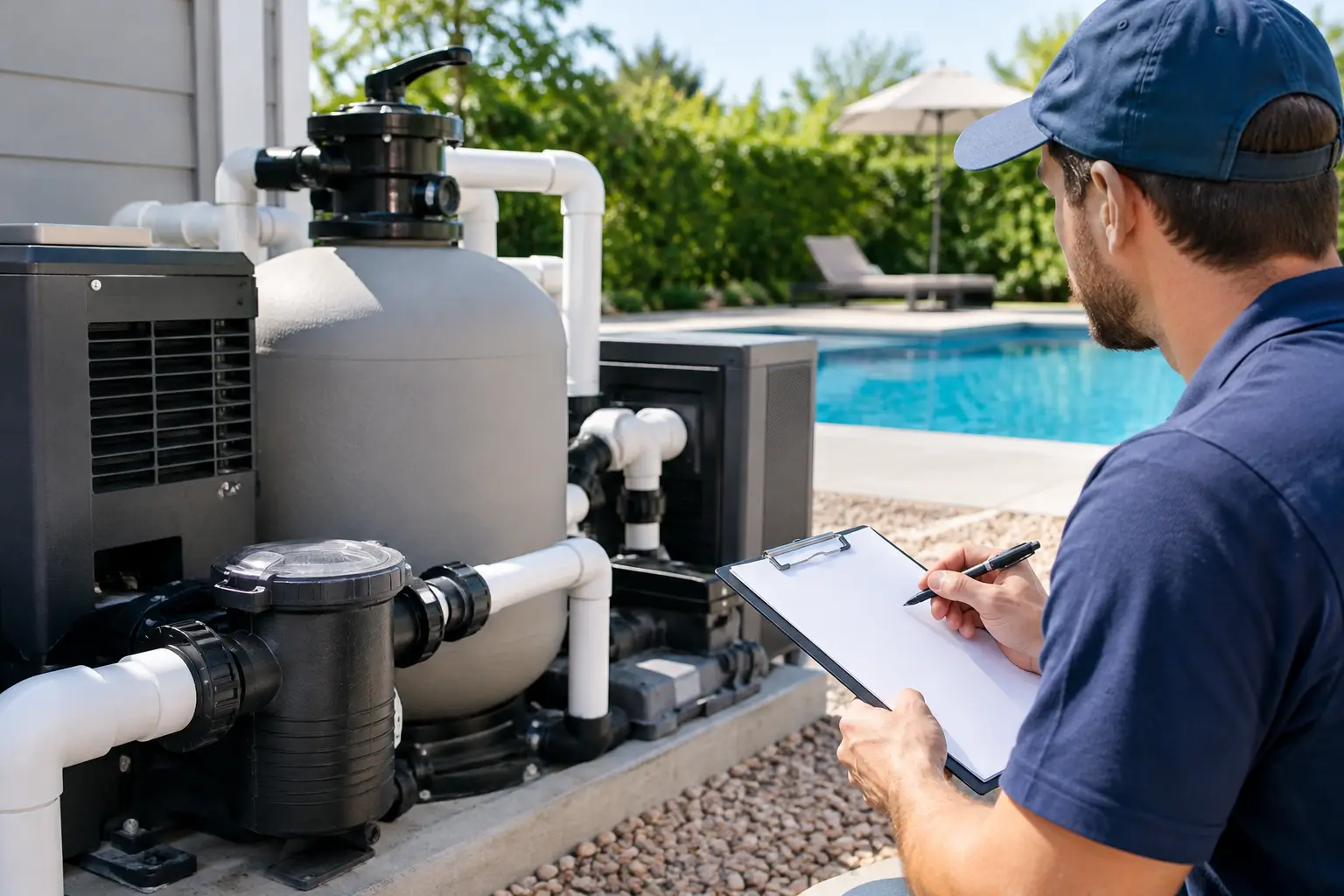
A pool can look perfectly composed from the patio while the equipment behind it is quietly approaching the end of its useful life. This pool equipment lifespan checklist helps homeowners recognize what deserves attention before an avoidable interruption affects water quality, comfort, or the look of a meticulously maintained outdoor space.
Equipment life is never just a matter of age. Installation quality, daily run time, water balance, weather exposure, and the consistency of professional care all matter. A well-maintained component may outlast the typical range, while neglected equipment can fail much earlier. The goal is not to replace every item on a fixed schedule. It is to plan intelligently, preserve what is working well, and avoid making urgent decisions when the pool should be ready to enjoy.
A Pool Equipment Lifespan Checklist by System
Pool pump: typically 8 to 12 years
The pump is the center of circulation. It moves water through the filter, heater, sanitizer, and return lines, so a problem here can affect the entire system quickly. Many modern variable-speed pumps can provide years of efficient service when they are kept clean, properly programmed, and protected from electrical irregularities.
Age alone does not tell the whole story. A loud bearing sound, a persistent leak at the seal, reduced circulation, recurring error messages, or difficulty priming all warrant professional attention. Sometimes a seal, capacitor, or motor repair is sensible. In other cases, particularly when multiple components are aging, replacement may be the more prudent long-term decision.
For a luxury pool environment, pump performance is also an experience issue. Weak circulation can leave water less polished, create uneven sanitizer distribution, and make the pool feel harder to manage. Regular inspection allows small concerns to be addressed before they become a disruption.
Pool filter: typically 7 to 15 years for the tank
A filter tank often lasts longer than its internal media or cartridges. Cartridge filters commonly need replacement cartridges every two to four years, depending on pool use, water conditions, and cleaning practices. Sand filter media may serve for five to seven years before it becomes less effective. A DE filter requires periodic grid inspection and replacement as components wear.
The filter’s pressure gauge and its behavior over time are useful indicators. Rising pressure after normal cleaning, cloudy water despite proper chemistry, cracks around the tank, leaking clamps, or damaged manifolds should be evaluated promptly. A filter that cannot maintain clarity creates more work for every other part of the system.
Filter maintenance is not glamorous, but it is one of the clearest ways to protect equipment life. When filtration is restricted, the pump works harder and circulation suffers. A professional service routine keeps the system operating with less strain.
Pool heater: typically 7 to 12 years
Whether a pool uses a gas heater or heat pump, heating equipment benefits from clean water chemistry and timely inspection. Heat exchangers, igniters, sensors, fans, and electrical controls can all become points of concern as equipment ages. Heater lifespan can vary considerably based on frequency of use, winter exposure, ventilation, and whether water chemistry has remained within appropriate ranges.
Warning signs include inconsistent heating, unusual cycling, ignition failures, error codes, water around the unit, or a heater that takes substantially longer to reach temperature. A heater does not need to fail completely before it deserves attention. Declining performance can be an early signal that a repair assessment is needed.
For seasonal residents and households that value spontaneous use, heater reliability deserves special consideration. It is easier to plan a repair or replacement before the first warm weekend than to discover a problem when guests are expected.
Salt cell or sanitizer system: typically 3 to 7 years
Salt chlorine generators simplify daily sanitation, but the cell itself is a consumable component. Calcium buildup, high bather load, long operating hours, and improper water balance can shorten its usable life. A cell may still appear intact while producing less chlorine than the pool requires.
If chlorine output declines despite appropriate salt levels and clean filtration, the cell should be inspected. Control boards and sensors also have their own service life, so diagnosis matters. Replacing a cell without checking the broader system can overlook the actual cause of the problem.
Traditional sanitizer systems have their own wear items, including feeders, tubing, check valves, and control components. The principle is the same: consistent water care protects both the equipment and the pool experience.
Valves, plumbing, and automation: inspect annually
Underground plumbing can last for decades, but exposed valves, actuator components, unions, O-rings, and fittings are subject to sun, temperature shifts, and routine operation. Drips at equipment connections may look minor, yet persistent leakage can waste water, affect circulation, and place stress on surrounding components.
Automation panels, relays, transformers, actuators, and remote controls do not share a single predictable lifespan. Electrical components may last many years, but exposure, moisture, pests, power fluctuations, and outdated programming can create issues. If features stop responding reliably, schedules reset unexpectedly, or valves do not rotate correctly, it is worth addressing the concern before it affects filtration or heating.
What Shortens Pool Equipment Life
The most expensive pool equipment problems often begin with conditions that seem routine. Improper water balance is one of the most significant. Water that is persistently corrosive or scale-forming can damage heaters, salt cells, seals, finishes, and internal components. Balanced water is not simply about comfort and clarity. It is preventative asset care.
Deferred cleaning also has a compounding effect. A neglected basket, overloaded filter, or obstructed pump intake can force circulation equipment to work harder than intended. Likewise, allowing a small leak, vibration, or error message to continue without evaluation can turn a targeted repair into a larger replacement decision.
Seasonal care matters as well. Northern Virginia weather places real demands on outdoor equipment. Proper openings, closings, freeze protection, and off-season monitoring help limit avoidable exposure. The right approach depends on the pool’s equipment configuration and how the property is used during cooler months.
How to Use This Checklist Without Replacing Too Soon
A lifespan range is a planning tool, not a deadline. If a pump is nearing ten years but running quietly, maintaining strong flow, and receiving proper service, replacement may not be necessary. Conversely, a newer component that repeatedly needs attention may deserve a more thorough assessment.
Keep a simple equipment record with installation dates, repairs, recurring issues, and model information. This gives you and your service professional a clearer picture of whether a repair is isolated or part of a pattern. It also makes seasonal planning more deliberate, especially for equipment that supports heating, automation, or sanitation.
The most useful review points are typically before pool opening, during midseason service, and before closing. These moments allow for inspection without competing with immediate pool use. For homes with frequent entertaining or extended swim seasons, a proactive equipment review can be especially valuable.
A Better Standard for Pool Stewardship
A pool should not demand that its owner become a technician. It should remain a refined, dependable part of the property, with equipment decisions handled before they become inconvenient. That requires attention to the details that are easy to miss from the waterline: pressure changes, small leaks, declining output, unusual noise, and components nearing their expected service range.
For qualifying gunite and concrete pools in Northern Virginia, The Pool Sharks provides professional maintenance, seasonal management, and technical repair support designed around that level of care. The practical next step is simple: review the age and condition of your key equipment before the next season asks more of it.