
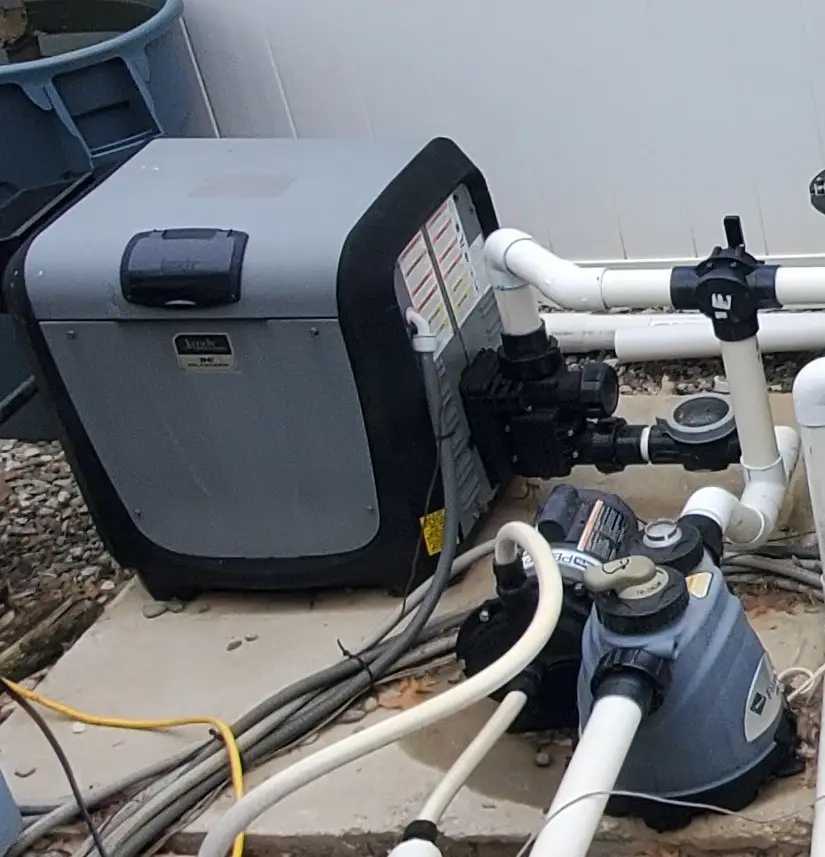
Pool Heater Reviews: Choosing the Right Heater for Your Northern Virginia Pool
By Ashton DeBosky | The Pool Sharks
A beautifully maintained pool should feel as inviting as it looks. When the water is too cold for a morning swim or an evening with friends, part of your backyard investment goes unused.
The right pool heater can make the water more comfortable and expand your opportunities to enjoy it. Choosing well, however, takes more than comparing star ratings.
Pool heater reviews are most useful when you understand how each system fits your property, Northern Virginia’s changing weather, and the way your family uses the pool. Heating speed, operating costs, equipment placement, and installation quality all deserve attention.
What Pool Heater Reviews Often Leave Out
An enthusiastic review may follow one warm weekend. A disappointed review may describe a heater that was incorrectly sized, poorly installed, or asked to perform beyond its capabilities.
Neither necessarily tells you how that equipment would perform at your home.
Look for reviews that explain:
- The pool’s size and location.
- The starting and desired water temperatures.
- How long heating takes.
- Whether the owner uses a pool cover.
- The season and outdoor conditions.
- Operating costs over several months.
- Reliability and service experience over time.
Separate equipment performance from installation problems. Inadequate gas supply, restricted water flow, incorrect programming, or poor airflow can affect an otherwise suitable heater.
For Northern Virginia homeowners, climate is especially relevant. A heat pump review from Florida may offer limited insight into performance during a chilly April opening in Loudoun County.
Gas Pool Heaters: Responsive Heating for Flexible Use
Natural gas and propane pool heaters use combustion to heat water. They generally provide faster temperature increases than heat pumps and are less dependent on outdoor air temperature.
That makes gas a strong option for homeowners who want occasional heating, cooler-weather use, or an attached spa that needs to warm quickly.
When Gas Heating Makes Sense
A gas heater may suit your property if you:
- Use the pool mainly on selected days or weekends.
- Want faster heating before planned gatherings.
- Need to heat an attached spa.
- Want heating capability during cooler parts of the season.
- Have access to an adequate natural gas supply or propane system.
Heating time still depends on pool volume, heater output, starting temperature, weather, and heat loss. Even a powerful heater needs advance planning to warm a large, cold pool.
What to Look for in Gas Heater Reviews
Pay attention to fuel consumption, ignition reliability, service history, and ease of operation.
Installation requirements matter just as much. Gas supply capacity, manufacturer clearances, exhaust placement, plumbing, and electrical connections must be evaluated before selecting equipment.
For propane systems, tank capacity and fuel delivery arrangements also affect the ownership experience.
Electric Heat Pumps: Steady Heating in Suitable Conditions
A pool heat pump transfers warmth from outdoor air into the water. Under suitable conditions, this can provide efficient temperature maintenance for homeowners who swim regularly.
Heat pumps generally warm water more gradually than gas heaters. Their capacity and efficiency vary with air temperature, humidity, and water temperature.
When a Heat Pump Makes Sense
A heat pump may be a good fit if you:
- Use the pool consistently throughout the warmer months.
- Prefer maintaining a comfortable temperature.
- Can allow more time for initial heating.
- Use a suitable pool cover regularly.
- Have the electrical capacity and space required for installation.
Northern Virginia’s cooler spring and fall conditions deserve careful consideration. Some models operate at lower outdoor temperatures than others, but the ability to operate does not mean they maintain the same heating output in cold weather.
What to Look for in Heat Pump Reviews
Look for details about performance during weather similar to yours, temperature recovery, operating costs, and sound.
Compare manufacturer performance ratings under equivalent conditions. A headline efficiency number measured in warm air may not reflect the conditions when you most want additional heat.
Placement also influences comfort. Fan and compressor sound may be more noticeable beside a bedroom window or quiet patio. Proper airflow and service clearances remain essential.
Solar Pool Heating: A Weather-Dependent Option
Solar pool heating circulates water through collectors that absorb energy from the sun.
With suitable exposure and enough collector area, solar can contribute useful heat with relatively low ongoing energy use. Performance depends on sunlight, shading, weather, collector placement, and system design.
When Solar Heating Makes Sense
Solar may suit homeowners who:
- Have a suitable roof or ground-mounted collector location.
- Receive strong sun exposure with limited shading.
- Accept gradual, weather-dependent heating.
- Want to supplement another heating system.
Solar does not offer the same predictable heating response as a properly designed gas system. Several cloudy or cool days can limit its contribution when comfortable water is most desired.
Reviews should describe the collector area, installation conditions, season, and use of supplemental heating.
Choose Around Your Pool and Your Schedule
The most useful question is: “Which heater fits the way we want to use our pool?”
A family swimming most days has different needs from a homeowner who heats the pool for occasional weekends. An attached spa creates another requirement, particularly when fast temperature increases matter.
A professional assessment should consider:
- Pool volume and exposed surface area.
- Desired water temperature.
- Preferred swimming season.
- Expected heating time.
- Wind and shade.
- Pool cover use.
- Attached spas and water features.
- Available gas and electrical capacity.
- Existing plumbing, automation, and equipment.
Surface area matters because much of a pool’s heat loss occurs at the water surface. Two pools with similar volumes can have different heating demands because of their shape, exposure, and cover habits.
Installation Quality Shapes the Results
A heater’s performance depends on the system around it.
Correct sizing, adequate utilities, compatible water flow, proper placement, and accurate controls help the equipment deliver the intended experience.
A heater selected without those checks can leave you with slow heating, recurring faults, or unexpected installation expenses.
A professional equipment assessment should also account for future maintenance. Technicians need access to service panels, valves, connections, and components.
Automation should make everyday use straightforward. Pool and spa settings need to match the plumbing configuration, and heating schedules should coordinate with pump operation.
At The Pool Sharks, we consider those details before recommending equipment.
What Really Affects Pool Heating Costs?
Fuel or electricity prices are only part of the calculation.
Your desired temperature, swimming season, local weather, wind exposure, pool surface area, and cover use all influence energy consumption.
Evaporation is a major source of heat loss. A suitable cover used consistently can help retain heat and reduce the energy needed to maintain temperature.
Choose a cover appropriate for your pool and follow its operating instructions. A thermal or solar cover should never be assumed to provide the protection of a rated safety cover.
Maintenance also matters. Balanced water chemistry, clean filters, and adequate circulation support heater operation. Improper chemistry can damage heat exchangers, while restricted flow can trigger protective shutdowns.
Addressing leaks and error codes promptly helps keep small problems from becoming larger interruptions.
Make Pool Heater Reviews Work for You
Reviews can reveal useful patterns, especially when several owners report similar experiences. Their value increases when the circumstances resemble your own.
Use them to develop questions for your installer:
- What heating performance should I expect in spring and fall?
- How much advance heating time will my pool require?
- Does my property need utility upgrades?
- How will this heater integrate with my spa and automation?
- What maintenance does the manufacturer require?
- What warranty terms apply to this installation?
Clear answers are more useful than a promise that one model is the best choice for every pool.
Find the Right Pool Heating Solution With The Pool Sharks
A well-chosen heater helps make your pool more comfortable and easier to enjoy.
The Pool Sharks evaluates your equipment, property, and swimming preferences to recommend a practical heating solution. Whether you need a heater repair, a replacement, or help comparing gas and heat pump options, we explain the choices and installation requirements.
We serve homeowners throughout Loudoun, Fairfax, Fauquier, and Prince William counties.
Call The Pool Sharks at (703) 452-2788 to schedule a pool heater assessment.
The Pool Sharks — Where Luxury Meets Peace of Mind.