
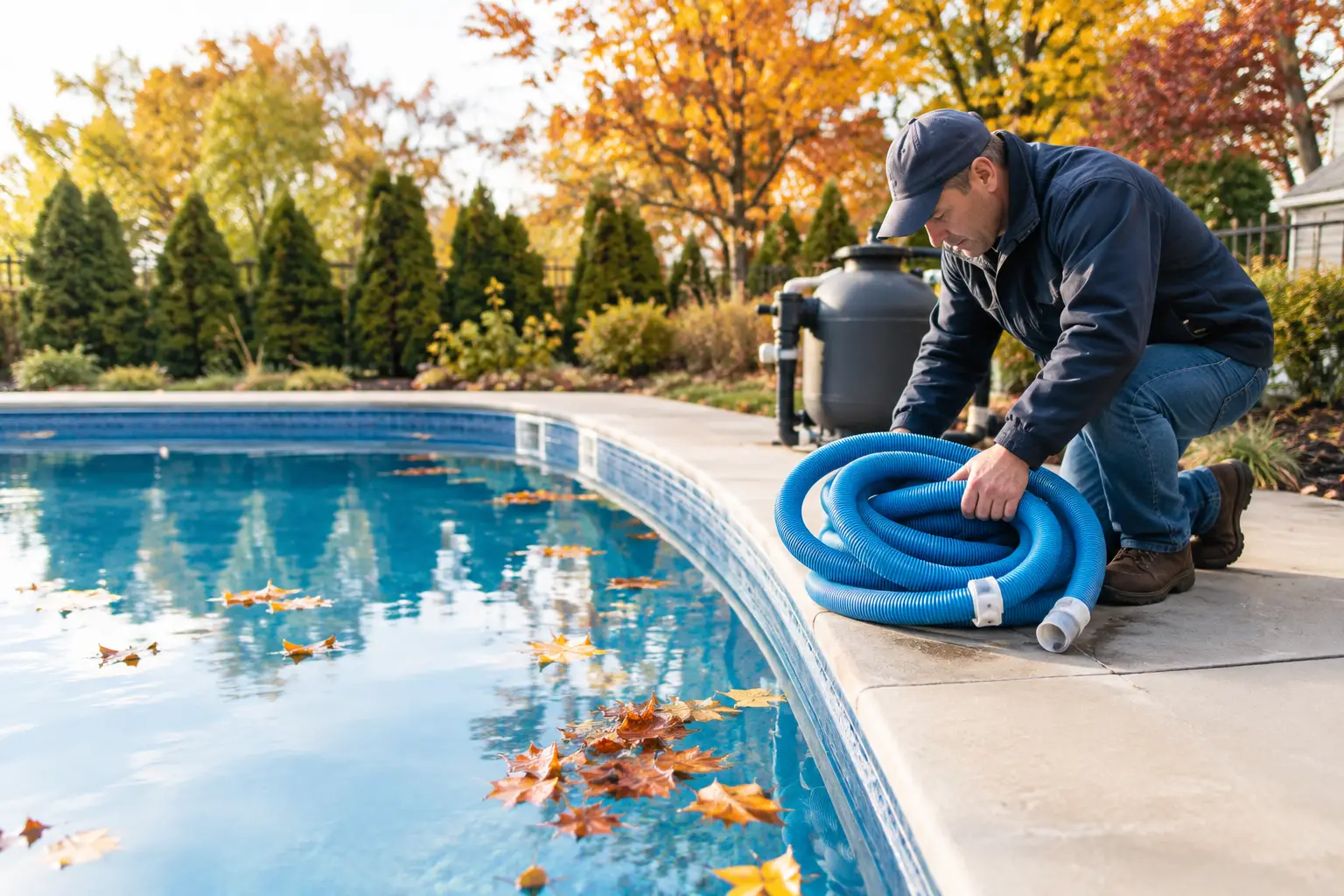
A pool can look perfectly settled for winter while hidden problems are already forming beneath the cover. The top pool closing mistakes are rarely dramatic on closing day. They show up months later as cracked plumbing, stained plaster, damaged equipment, or an opening appointment that becomes a repair project. For homeowners who expect their backyard to be ready when the season returns, a precise closing is one of the most valuable forms of preventive care.
Why a Professional Pool Closing Matters
Closing a pool is not simply a matter of lowering the water, adding chemicals, and installing a cover. It is a coordinated process that protects the water, the circulation system, the pool surface, and the equipment through a long period of inactivity.
The right approach depends on the pool's finish, equipment configuration, sanitation system, cover type, and local winter conditions. A mild climate may call for a different water level and winterization strategy than a region with repeated hard freezes. That is why a one-size-fits-all checklist can leave expensive details unattended.
The Top Pool Closing Mistakes Homeowners Should Avoid
1. Closing Before the Water Has Cooled
A warm pool provides a welcoming environment for algae, even after it has been covered. Closing too early can leave homeowners with green water, persistent staining, and a more demanding spring opening.
A professional service team watches water temperature, not just the calendar. In many areas, waiting until water temperatures remain consistently cool makes winter chemistry more effective and reduces the likelihood of algae growth beneath the cover. Waiting too long has risks as well, especially where freezing weather arrives quickly, so timing should be managed with local conditions in mind.
2. Covering a Pool That Is Not Properly Balanced
Winter chemicals are not a substitute for balanced water. If pH, alkalinity, calcium hardness, or sanitizer levels are far outside their proper ranges when the pool is closed, the water can become corrosive or scale-forming while no one is actively monitoring it.
That imbalance can affect plaster, tile, metal components, liners, and equipment. It may also allow stains to set into a surface over the winter. Before closing, the water should be tested and adjusted thoughtfully, then treated with the appropriate closing products for the pool's specific needs. More chemicals are not necessarily better. The goal is stable water that protects the investment resting beneath the cover.
3. Skipping a Thorough Cleaning Before Closing
Leaves, pollen, oils, fine debris, and organic matter do not disappear when a pool is covered. They break down in the water, consume sanitizer, contribute to staining, and make spring cleanup more difficult.
A proper closing begins with a pool that has been skimmed, brushed, vacuumed, and cleared of debris from baskets and circulation areas. This is particularly important for pools surrounded by mature trees or heavy landscaping. A pristine-looking cover is no indication that the water below is protected from the debris that was left behind.
4. Draining the Water Too Low
It is understandable to think that lowering water further offers more protection from freezing. In reality, excessive drainage is among the most costly top pool closing mistakes. Water supports the pool structure and, in some cases, protects finishes and liners from unnecessary stress.
The correct water level depends on the cover system, tile line, skimmers, plumbing design, and winter weather patterns. A mesh safety cover may require a different level than a solid cover with a pump. Lowering water without considering those details can expose surfaces, create cover problems, or complicate winter water management. This is not a decision best made by habit or guesswork.
5. Failing to Winterize Plumbing Completely
Pool plumbing is especially vulnerable during freezing conditions. Water expands when it freezes, and even a small amount left in a vulnerable line can crack pipes, fittings, valves, or equipment components.
Effective winterization involves more than opening a drain plug. Lines must be cleared with the right technique and pressure, then protected as appropriate for the system. Skimmer protection, return fittings, heater care, booster lines, water features, and attached spa plumbing all deserve attention. Complex pools often have multiple hidden runs that can be overlooked without a methodical inspection.
6. Forgetting About the Pump, Filter, Heater, and Accessories
The pool itself is only part of the winterization process. Pumps, filters, heaters, salt systems, automation panels, cleaners, and decorative water features each have their own requirements. A missed drain plug or improperly stored component can turn a routine closing into an avoidable equipment replacement.
Equipment should be inspected before it is shut down, not merely after it has failed. This gives homeowners an opportunity to address worn seals, leaking unions, aging valves, or heater concerns before winter weather makes access difficult. It also preserves a clear record of any repairs recommended for the coming season.
7. Using a Damaged or Poorly Secured Cover
A pool cover is a protective system, not a cosmetic finishing touch. Tears, worn hardware, loose anchors, weak straps, or poor fit can allow debris into the pool and create safety concerns. A sagging solid cover can also collect large amounts of rainwater and debris, placing strain on the material and the pool deck.
Before installation, the cover should be examined closely for wear, especially along seams, attachment points, and areas exposed to heavy sun or wind. It should then be secured with proper tension. For homes that are vacant for part of the winter, periodic cover checks are especially valuable. A small issue noticed early is much easier to address than a cover failure after a storm.
8. Ignoring the Pool Once It Is Closed
A pool does not require weekly summer-style service during winter, but it should not be forgotten until spring. Wind, heavy rain, snow load, fallen branches, and fluctuating temperatures can all affect the cover and the water beneath it.
Winter check-ins help identify standing water, cover stress, debris accumulation, lowered water levels, or signs that a safety cover needs adjustment. They also provide peace of mind for seasonal residents and busy homeowners who may not be present after every weather event. Concierge-level pool care means the pool remains under professional stewardship even when it is out of sight.
9. Treating Closing as a Separate Task From Year-Round Care
The best closing begins long before autumn. A pool with neglected chemistry, unresolved leaks, aging equipment, or persistent algae issues is harder to winterize successfully. Seasonal transitions work best when they are part of a continuous care plan rather than a last-minute service call.
Consistent maintenance gives a service professional a working knowledge of the pool's circulation patterns, equipment history, water behavior, and recurring concerns. That familiarity supports better decisions at closing and a cleaner, more efficient reopening. For high-value outdoor spaces, continuity is not a luxury. It is a practical way to protect the ownership experience.
A More Reliable Standard for Winter Pool Care
A well-managed pool closing should leave no uncertainty about what was inspected, adjusted, protected, or recommended. Homeowners should know that the water is prepared for dormancy, the plumbing has been properly winterized, the equipment has been reviewed, and the cover is ready to perform through the season.
At The Pool Sharks, closing service is approached with the same attention to detail as weekly maintenance and repair work. The objective is not simply to finish the season. It is to preserve the pool's condition, protect the equipment behind it, and make the return to warm-weather living feel effortless.
Before the first sustained cold spell arrives, schedule your closing with enough time for careful preparation. A calm, well-executed fall service appointment is often what keeps spring from becoming an expensive surprise.